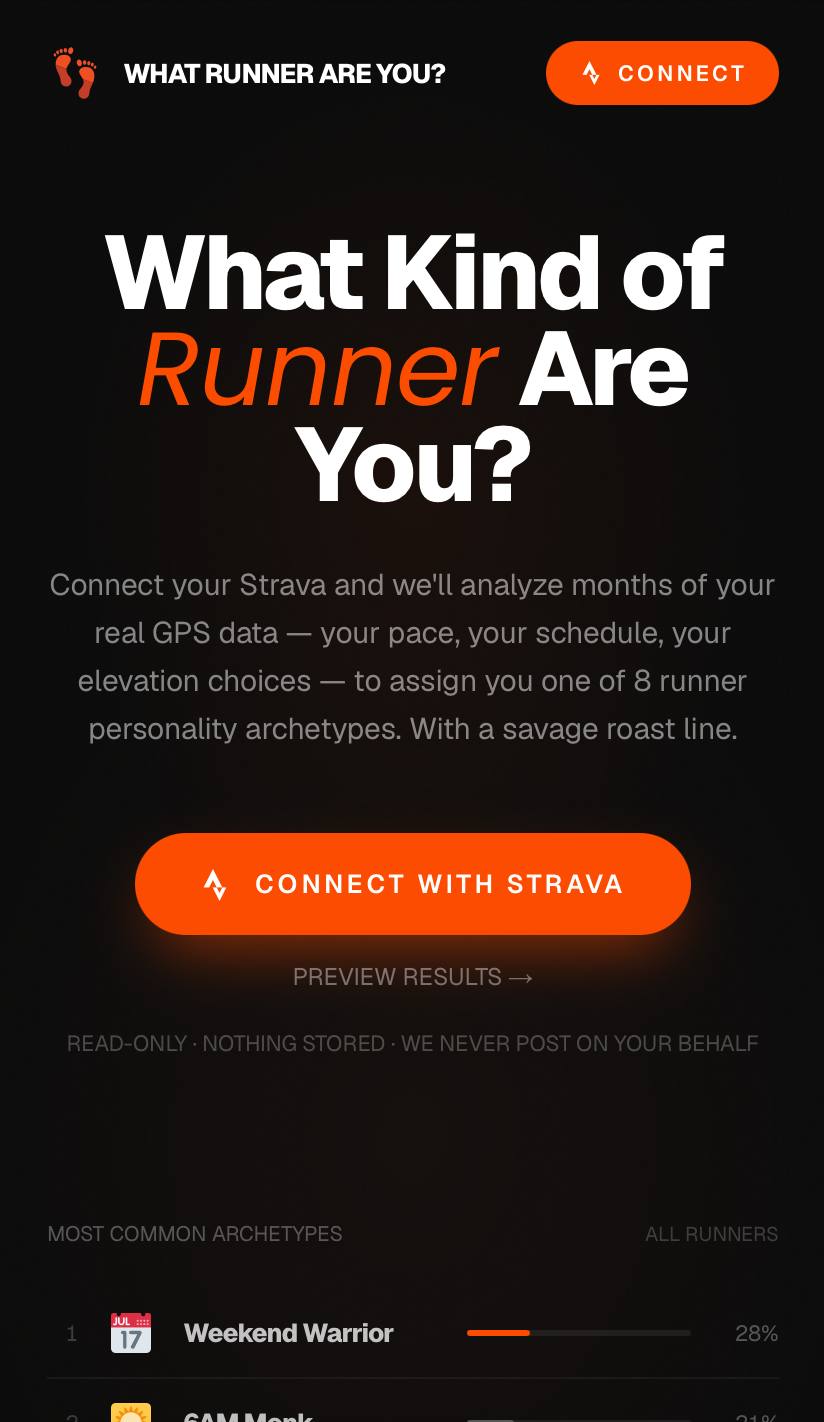
Every runner believes something about themselves. The data usually disagrees. What Runner Are You? connects to your Strava, reads your actual GPS history — pace, schedule, elevation — and tells you which of 8 runner archetypes you really are, with a personalized roast line to make sure it stings a little.
It's built on Next.js and React 19 with TypeScript and Tailwind v4, and it holds on to exactly none of your data: the analysis happens on the spot and evaporates when you leave.
Log in with your legs
There's no form to fill and nothing to type. Strava OAuth is the whole onboarding: one tap, and the app is reading the story your runs have been writing for months.
What your runs confess
The classifier weighs the things a training partner would notice about you:
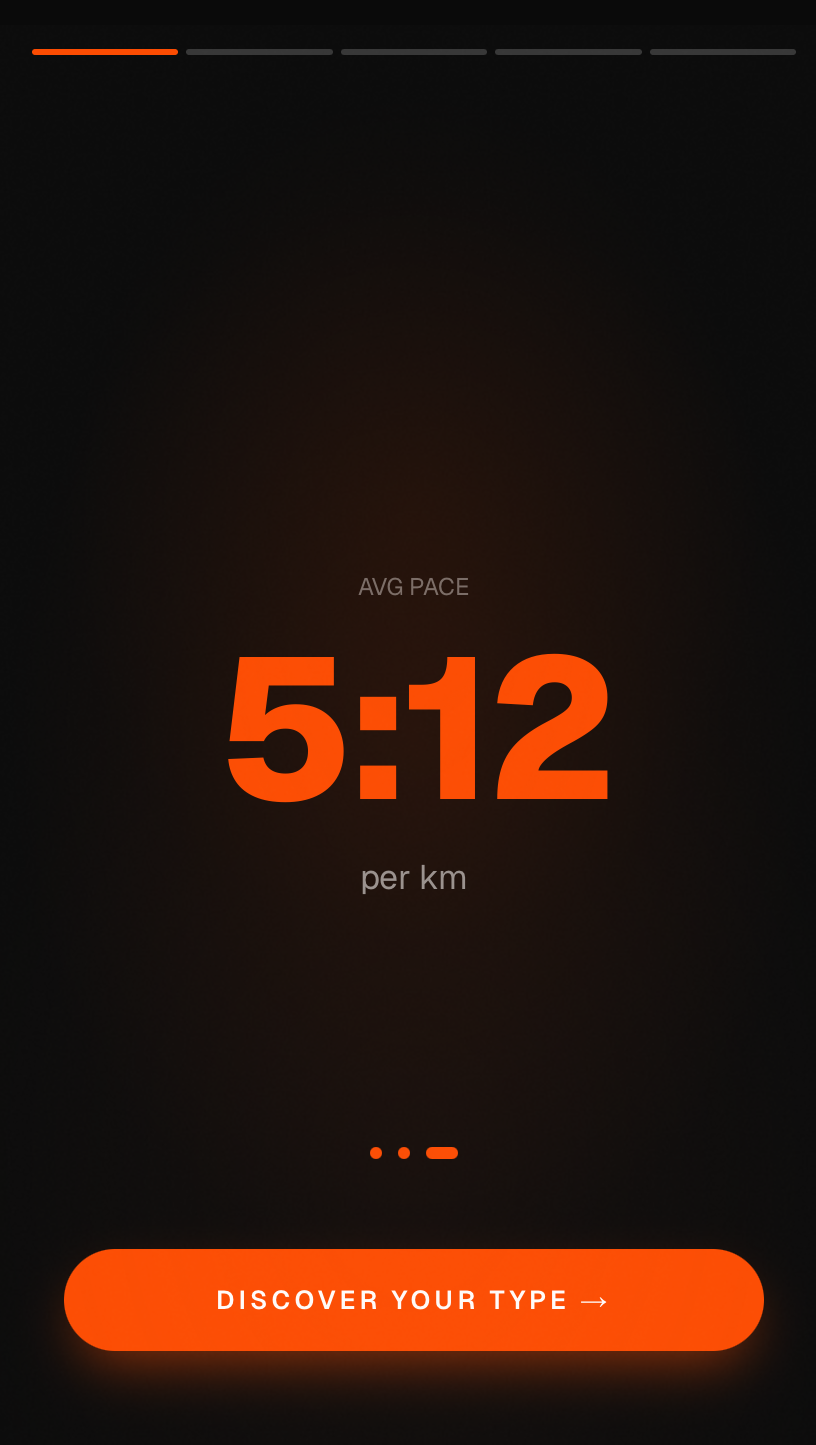
Not the pace you tell people — the pace across your real GPS history. The gap between the two is often the roast.
Five-a.m. discipline, weekend-warrior bursts, or chaos with no pattern at all — schedule is personality.
Elevation gain separates the sufferers from the strategists. Flat-route loyalty is also a choice, and the app notices it.
Distance distribution tells on you — the eternal 5K-er and the long-haul zealot get very different verdicts.
Eight ways to be a runner
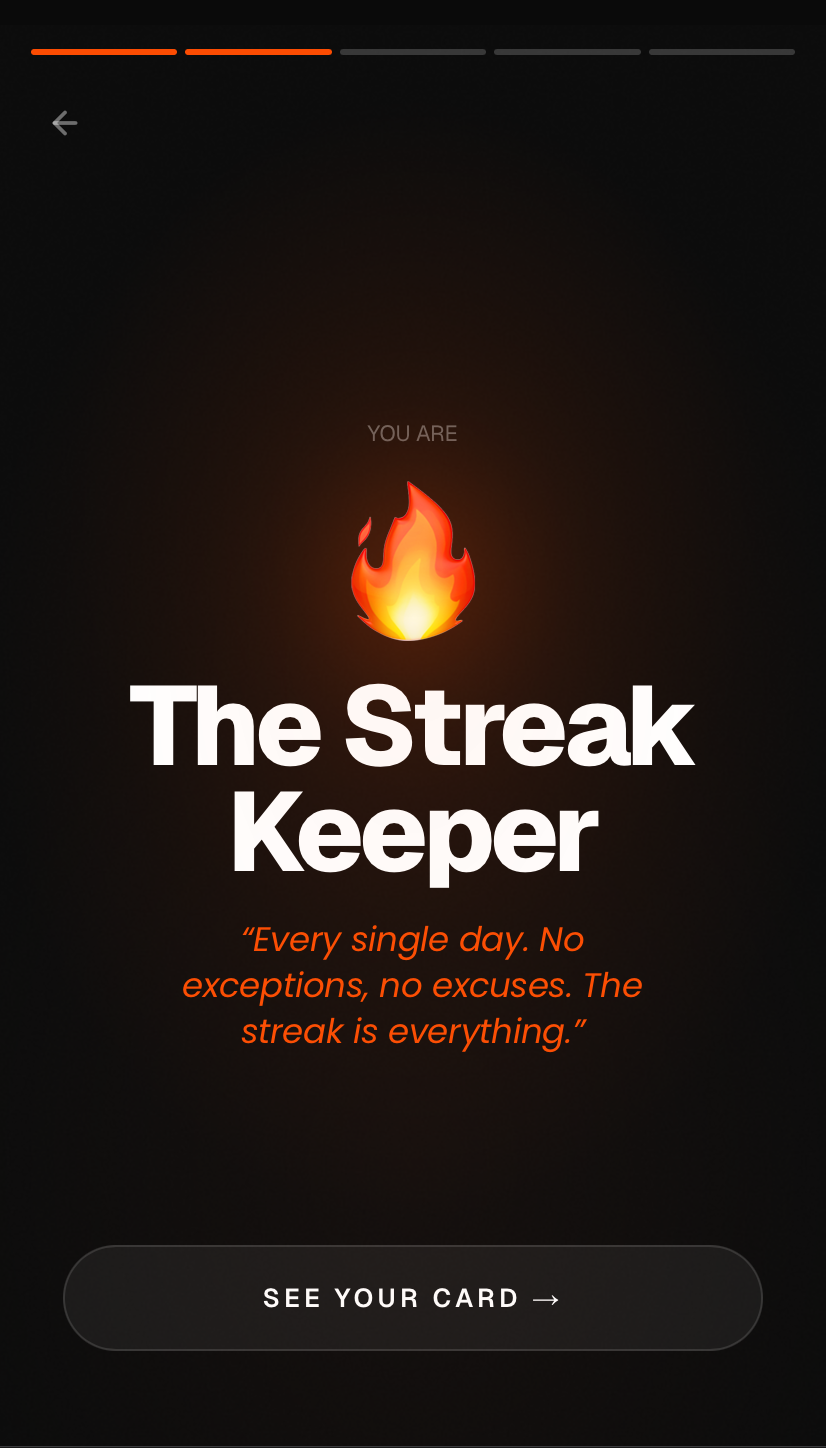
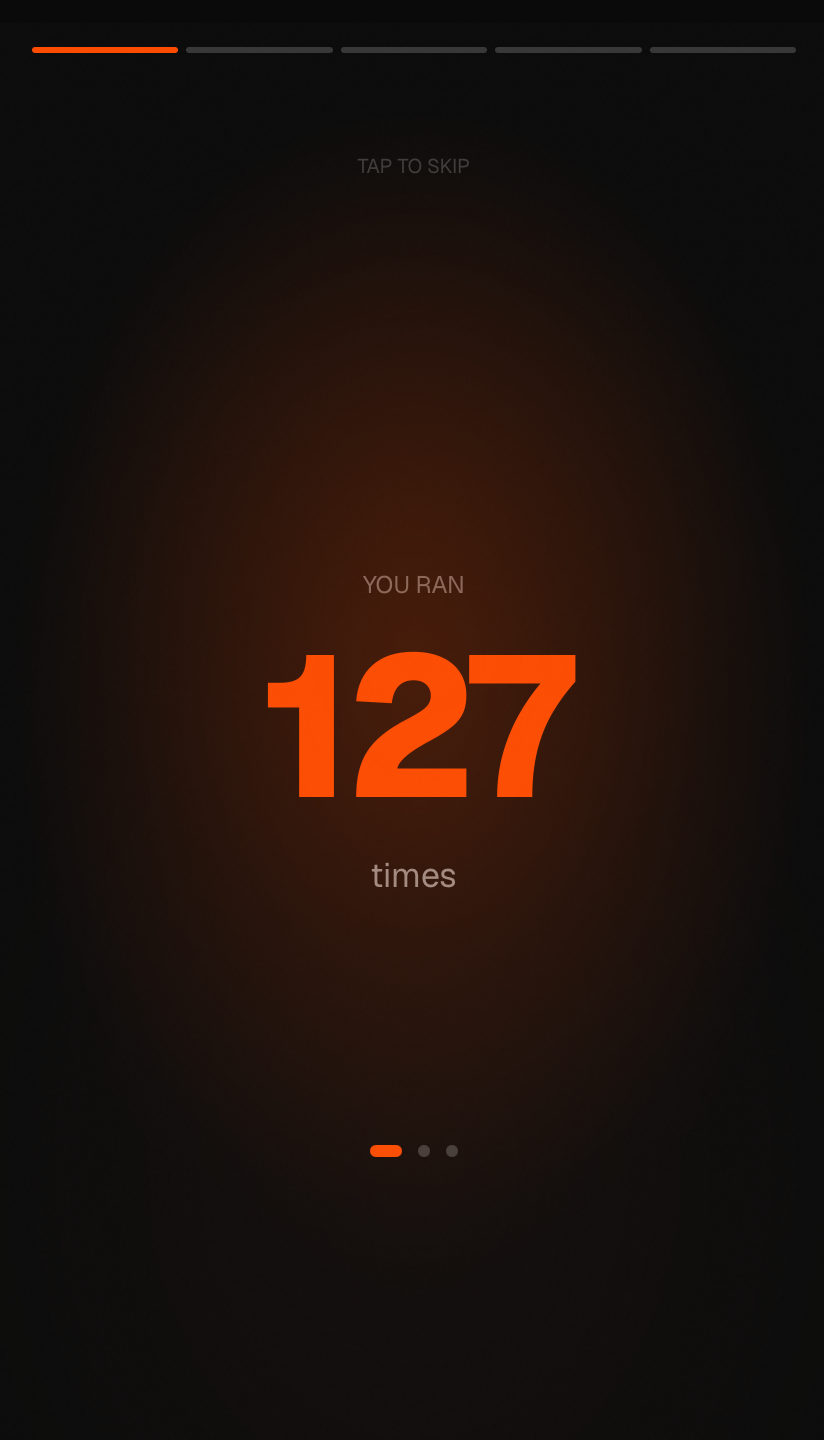
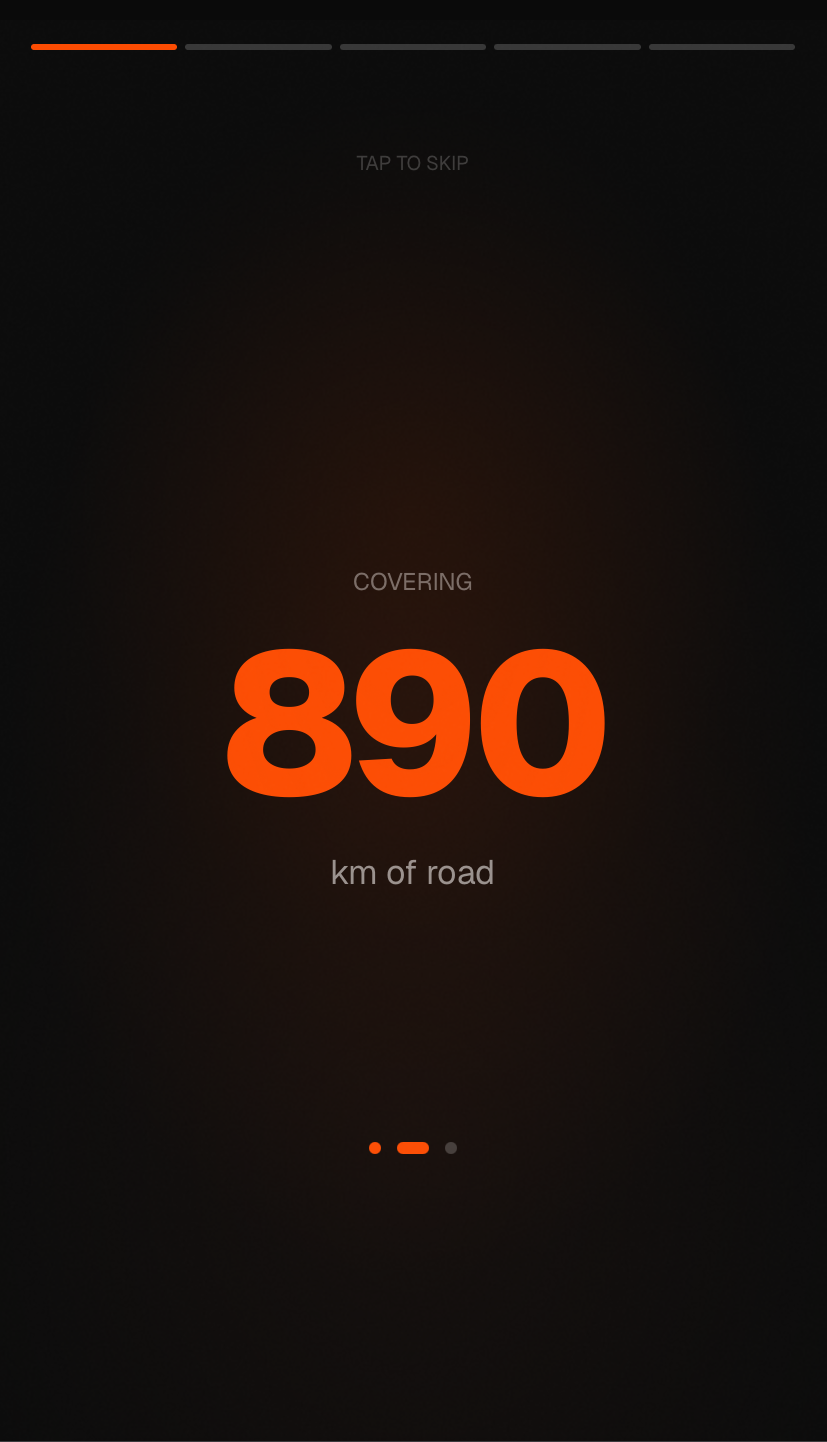
The signals combine into one of eight archetypes — a shareable identity with a roast calibrated to your own numbers. The reveal plays out like a story, one stat at a time, before the verdict lands.
Read once, judged once, stored never.
Strava data is pulled through OAuth, classified in memory, and returned as your archetype — the app has no database to keep any of it in.
Your runs are read for the verdict and never written anywhere.
Revoke the Strava connection and the app has literally nothing left of you.
A card worth sharing
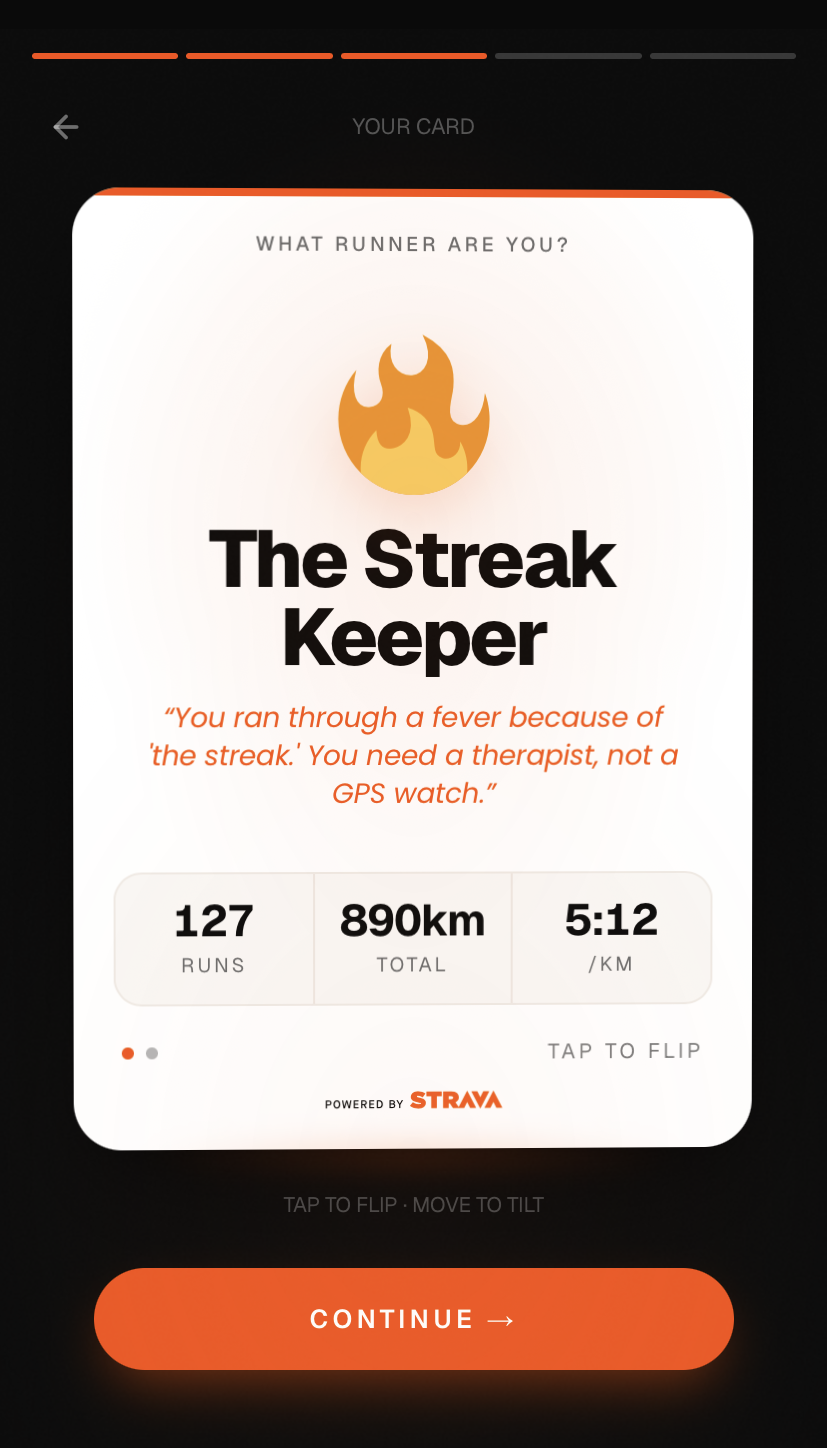
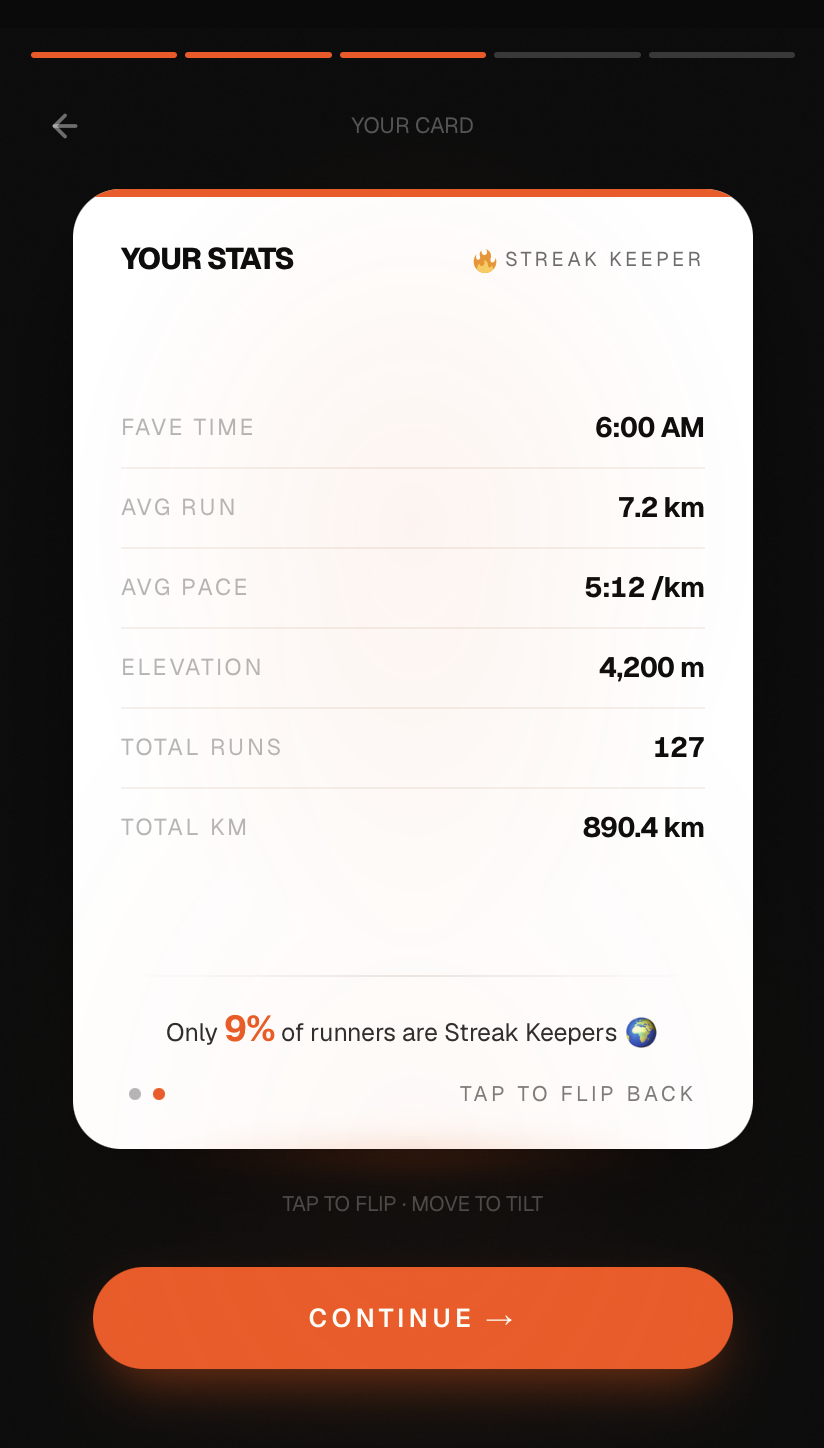
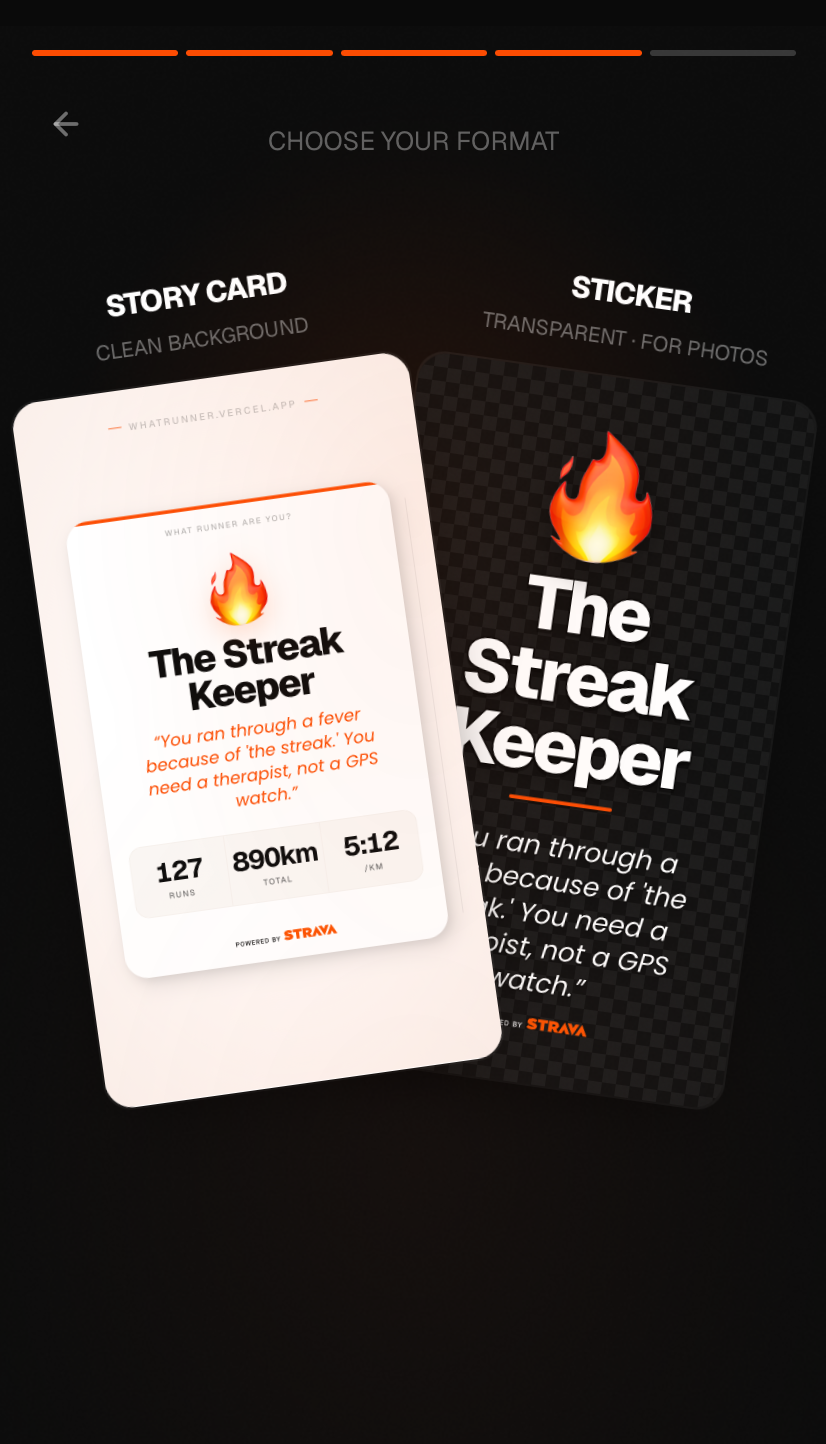
The verdict ships as a designed card — front for the archetype, back for the receipts — with export formats sized for stories, feeds, and group chats. The share is the growth loop: every roasted runner shows three friends.
What comes next
The archetype engine is deliberately separable from Strava — the same read-classify-roast loop could sit on any activity API. More sports, same sting.