The Gerald Genta Unit is a 16-advisor Sun Life financial advisory unit in the Philippines — and AdvisorDeck is the software the advisors and their unit manager log into every working day. It started as the answer to a familiar operational mess: prospecting, servicing, campaigns, calendars, and production lived in a pile of spreadsheets. The spreadsheets are retired now; the unit runs on one app.
The manager sees the unit as a live control room: production, campaign KPIs, task assignment, recruitment, AHO imports, and print-ready reports. Advisors get their own workbook: calendar, clients, prospecting, production, servicing, collections, calculators, streaks, badges, and leaderboards. Screenshots use mock demo data; the real book stays private.
What the workspace now automates
The product does not just store data — it models how a client actually moves through the unit. A 12-stage client lifecycle carries every record from cold prospect to in-force policy, and the app generates the work that falls out of it: birthdays, annual reviews, 90-day check-ins, premium collections, campaign deadlines, and advisor meetings all surface inside the dashboard.
Every client record moves through one pipeline — prospect, production, approval, in-force, collections — so no stage depends on a side file or somebody's memory.
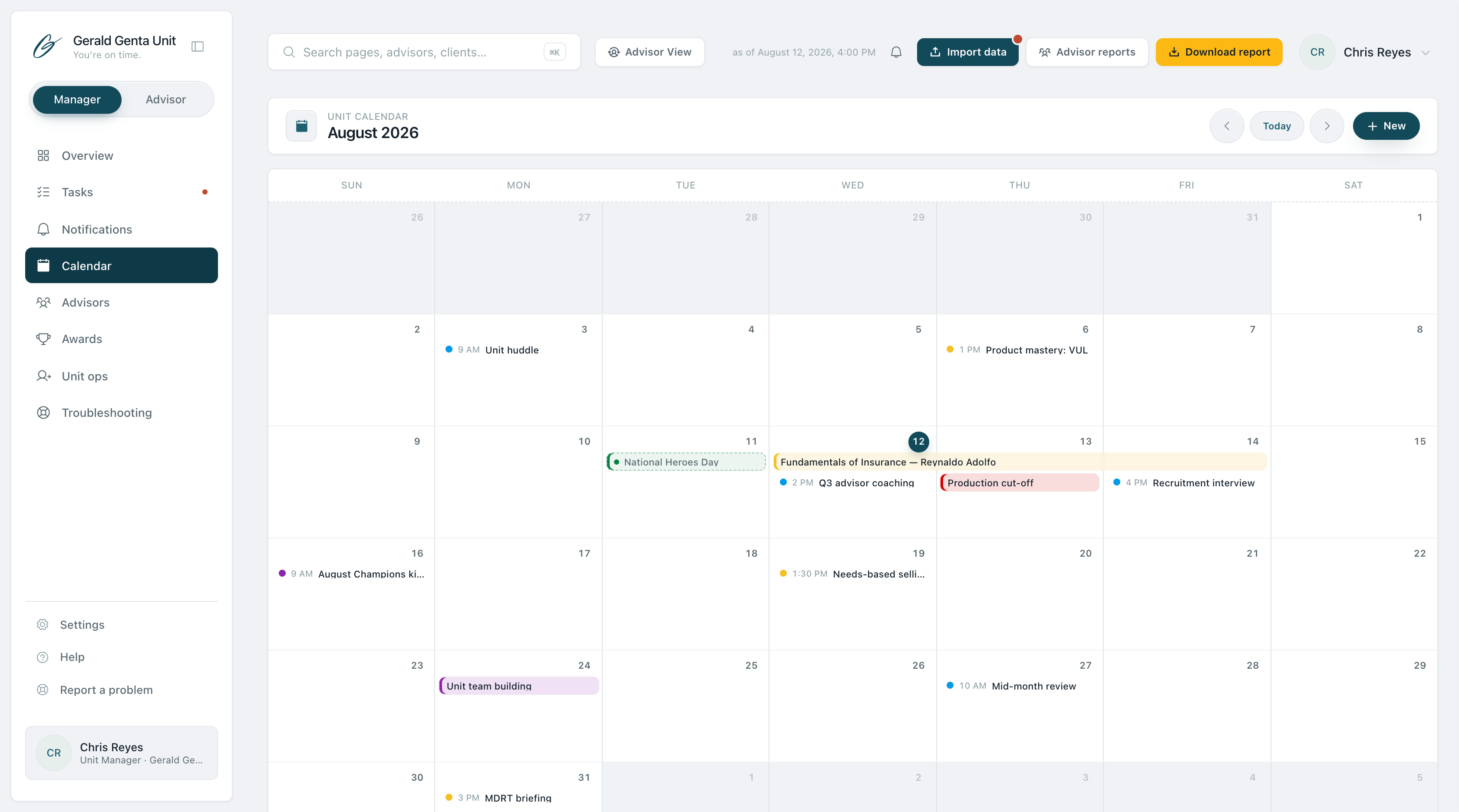
Advisor schedules sync to Google Calendar so follow-ups, reviews, meetings, and premium collections are visible where the advisor already plans the week.
Streaks, badges, campaign goals, and leaderboards give advisors a daily reason to keep records updated instead of waiting for a manual chase.
AHO imports and print builders turn official production files into reconciled dashboards, selected sections, and dated PDF reports for the unit manager.
One login, two very different rooms
The product is still one app with two scopes. Advisors sign in with a role-based advisor code and get a private workbook; the manager gets the unit-wide command center. Postgres row-level security keeps each advisor's book scoped to them while the manager can review the full unit — the filter runs in the database, not just the interface.
Each login sees exactly its rectangle.
The advisor's book sits inside the manager's unit view, which sits inside the database. The boxes are enforced by the database itself, so every query is filtered by role before a row leaves Postgres.
everything the unit tracks — prospects, policies, requests, goals
the whole unit — KPIs, leaderboards, every book
their own book, nothing else
Every row lives once, in Postgres
Unit-wide reads, import and report rights
Row-level security filters every query
RLS policies run on every table, not just in the interface.
Sixteen advisors and one manager share the app without sharing rows they should not see.
The manager's control room
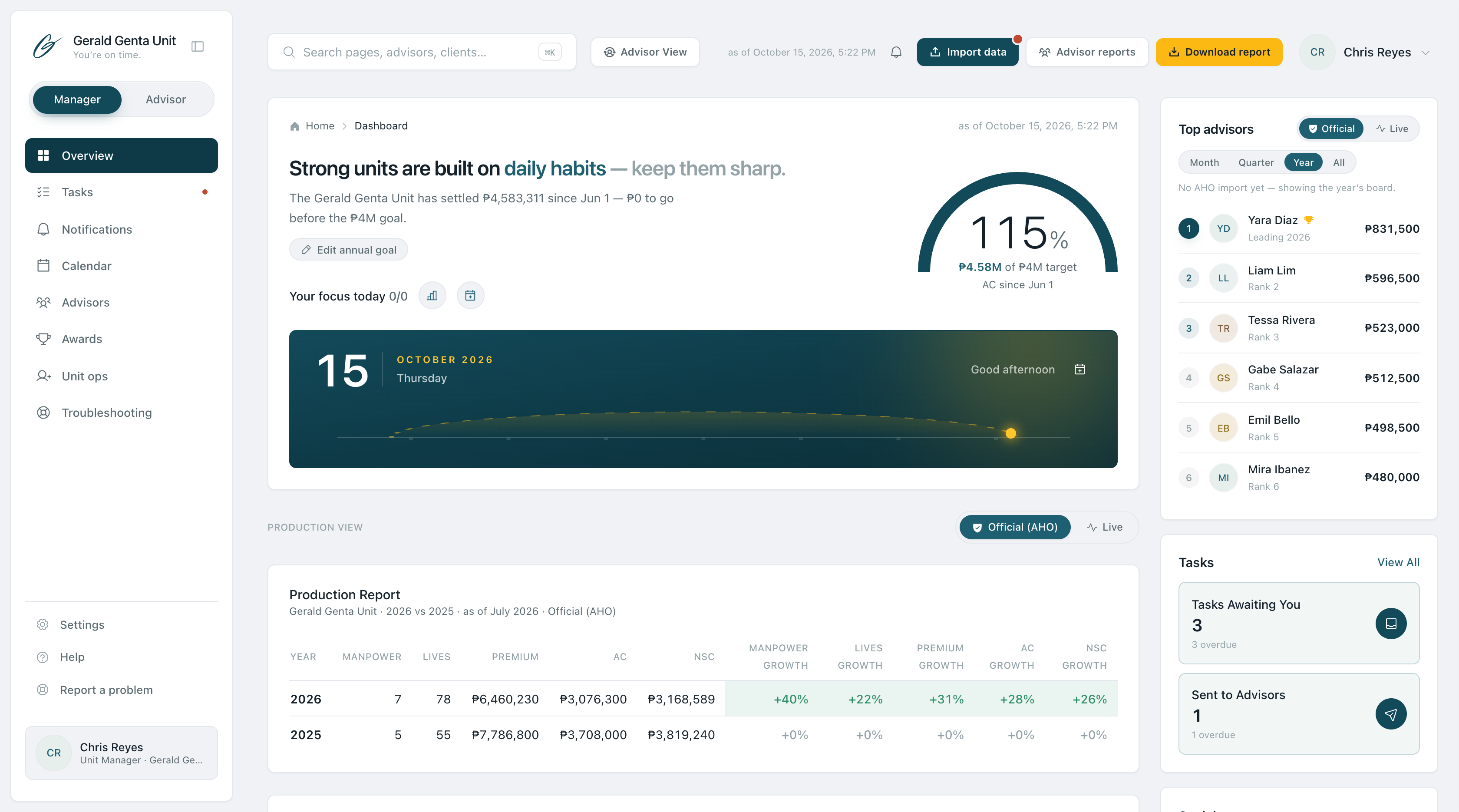
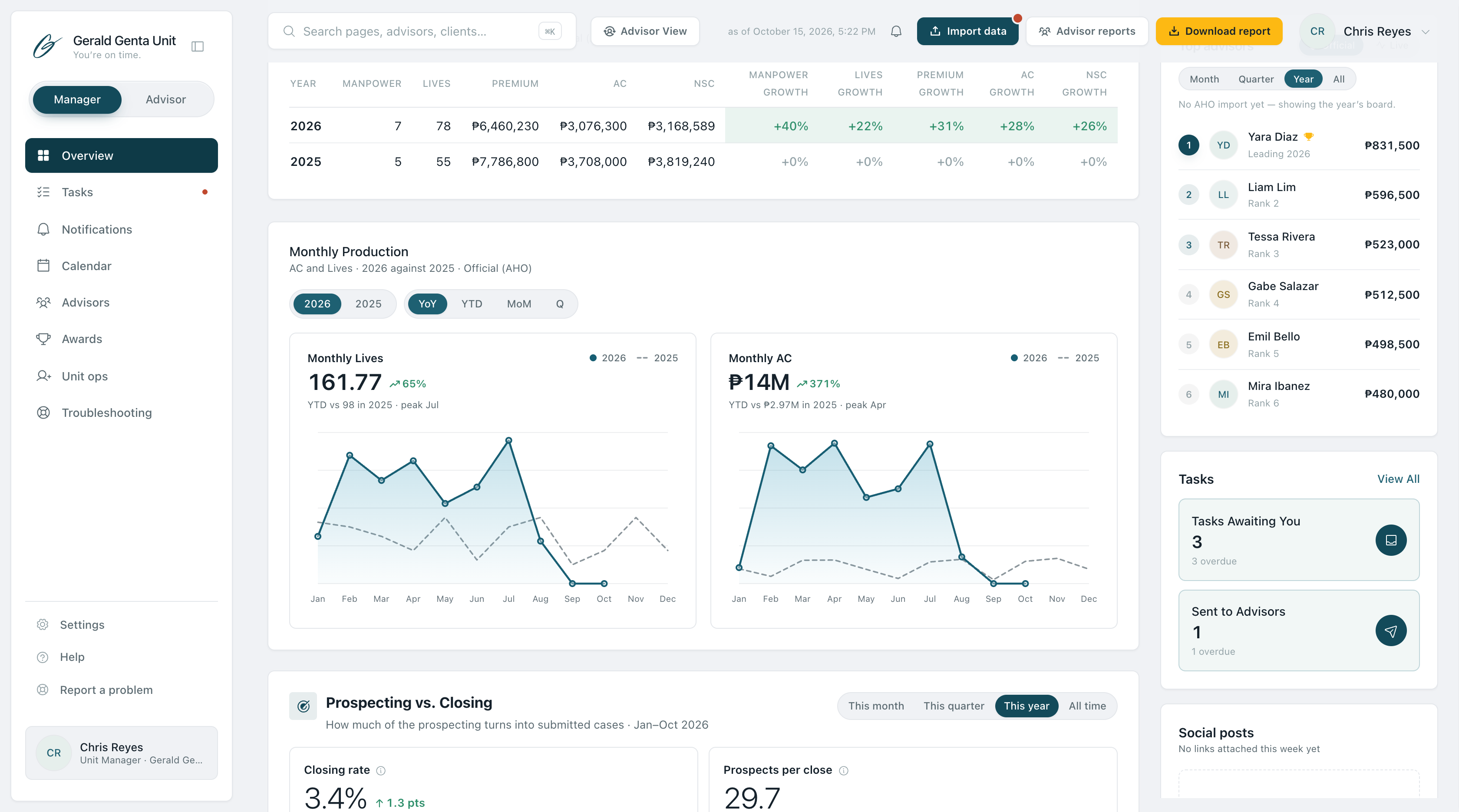
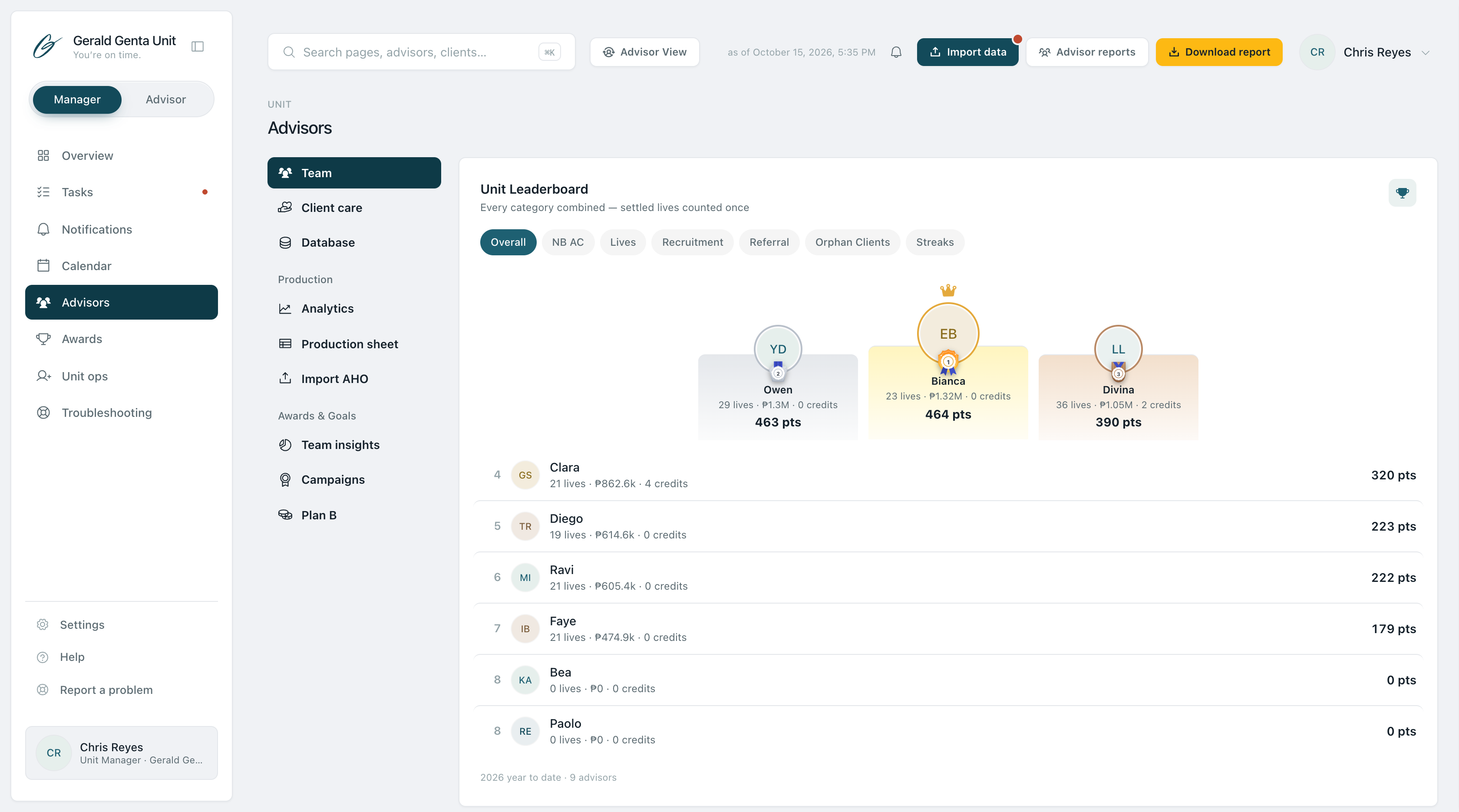
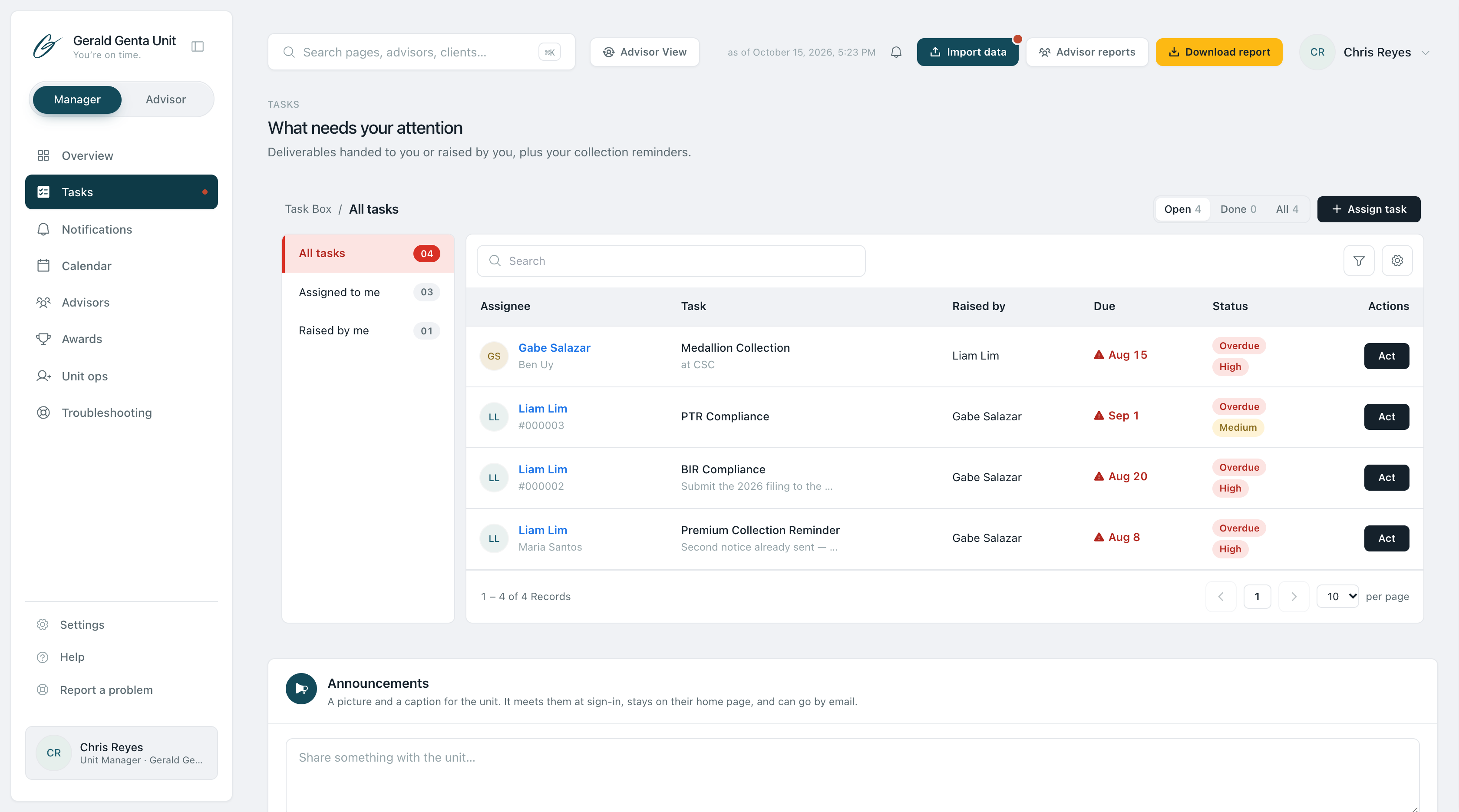
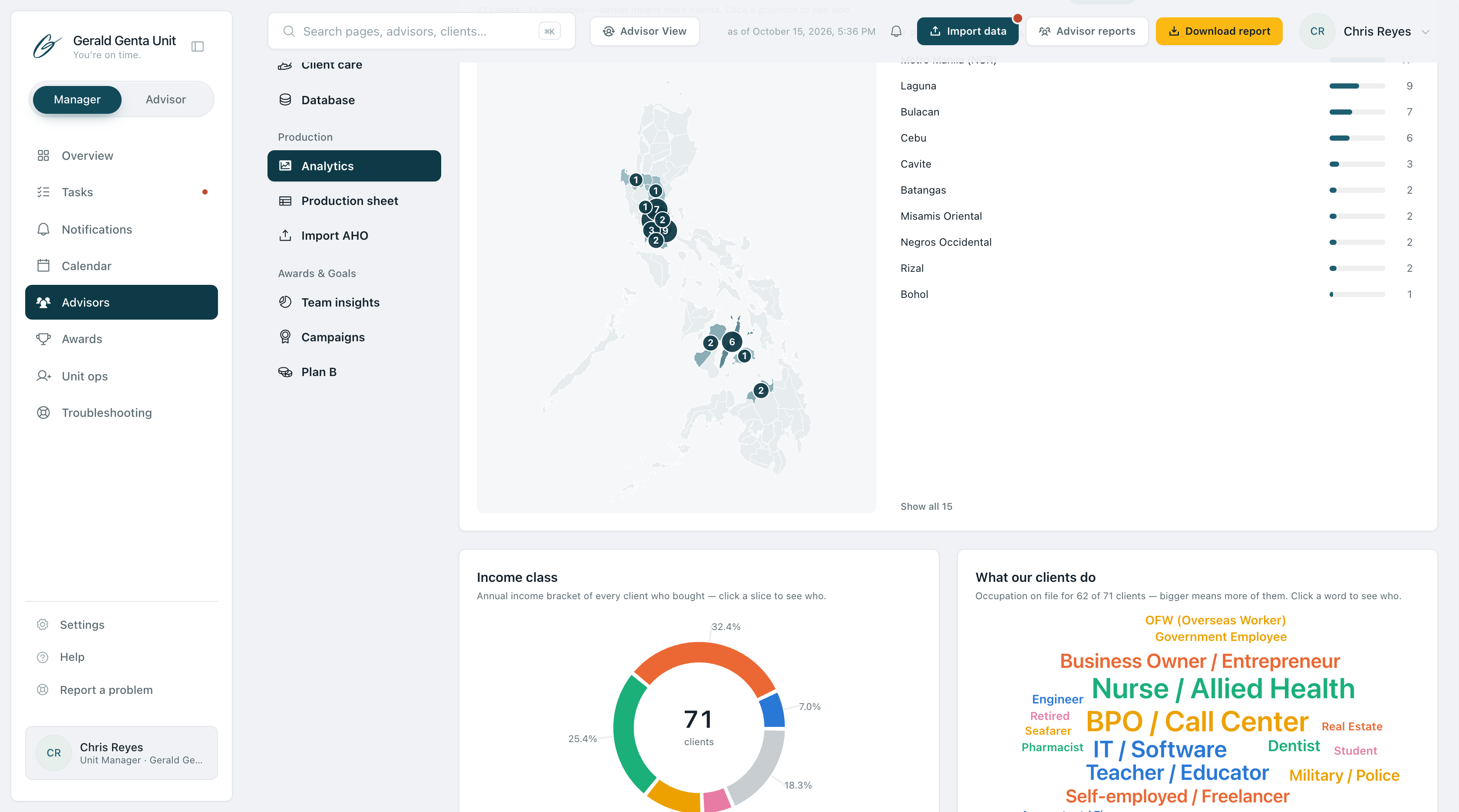
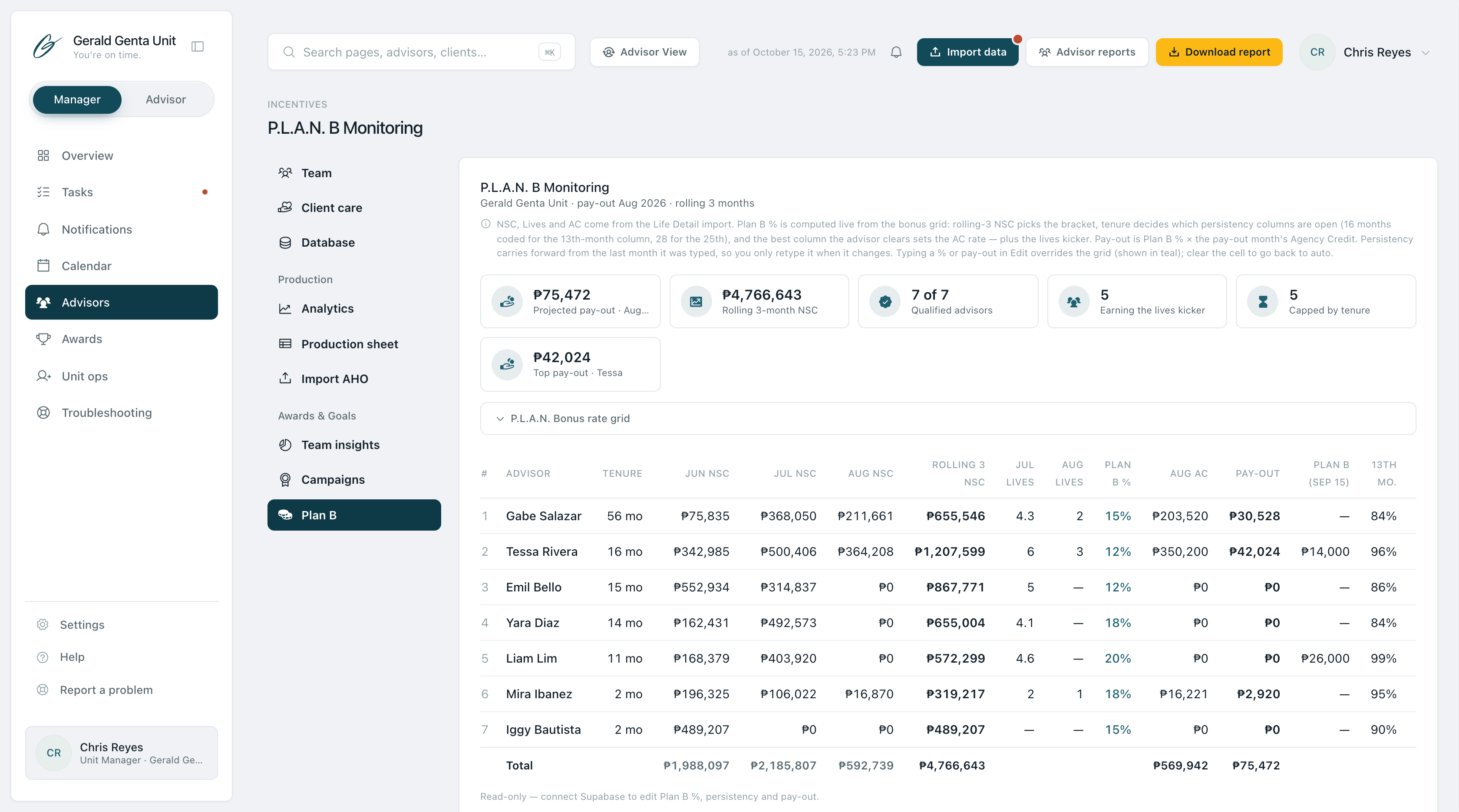
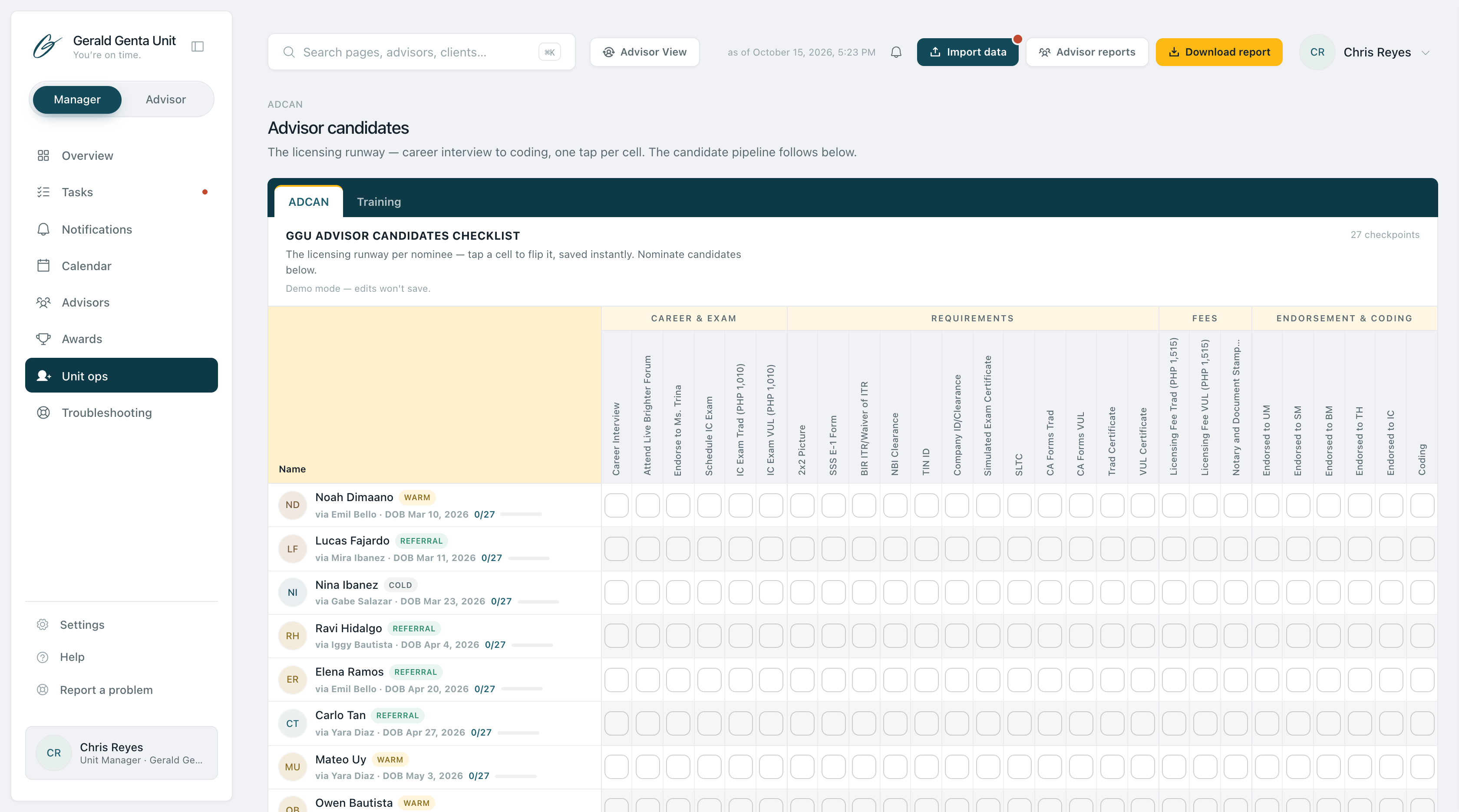
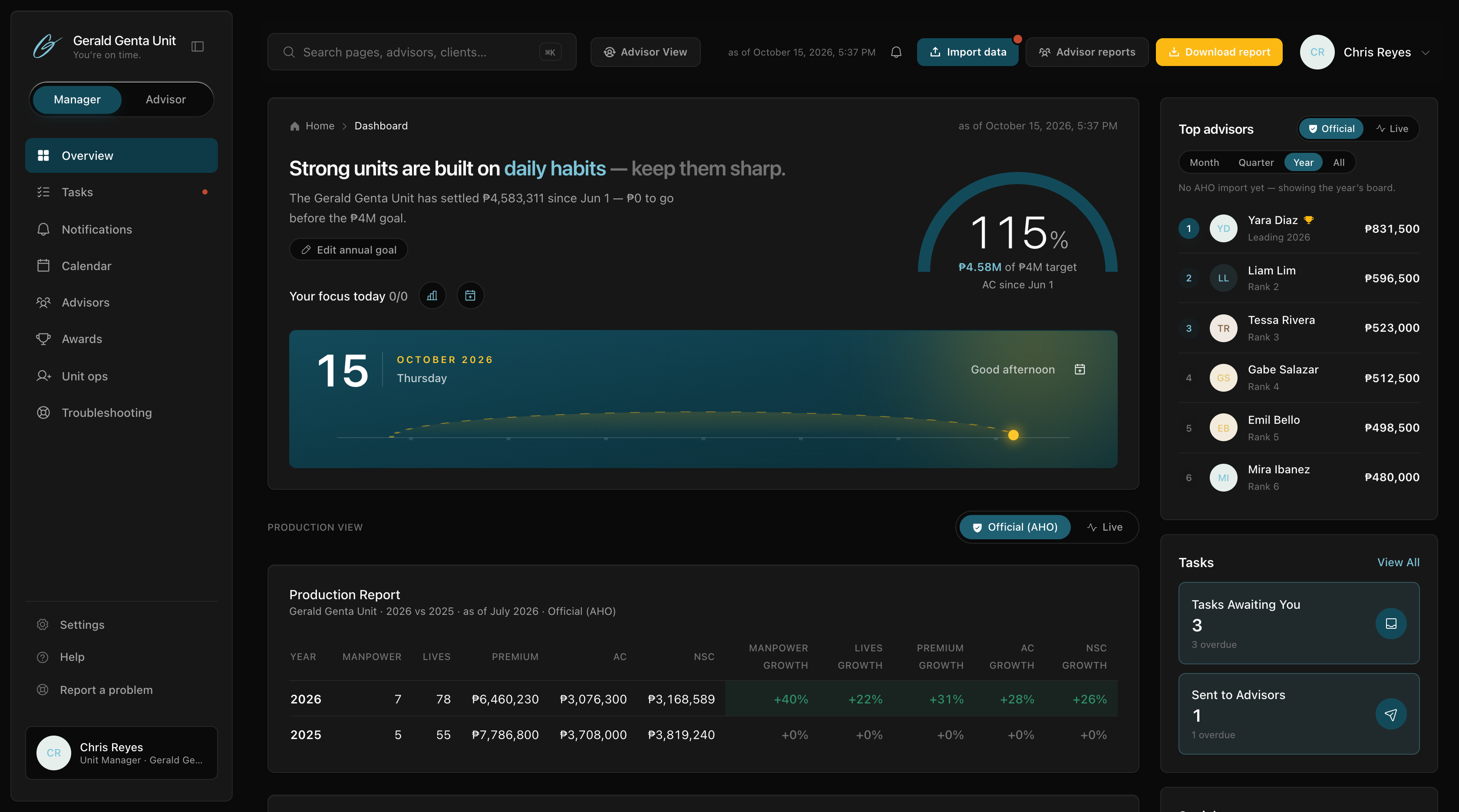
The manager dashboard turns the unit into a single readable picture: official-vs-live production, growth against last year, the unit leaderboard, task assignment, the recruitment pipeline, campaign qualifications, and Plan B bonus monitoring. Instead of opening a spreadsheet and asking what changed, the manager opens the dashboard and decides who needs coaching and what gets printed.
A full-fledged advisor calendar
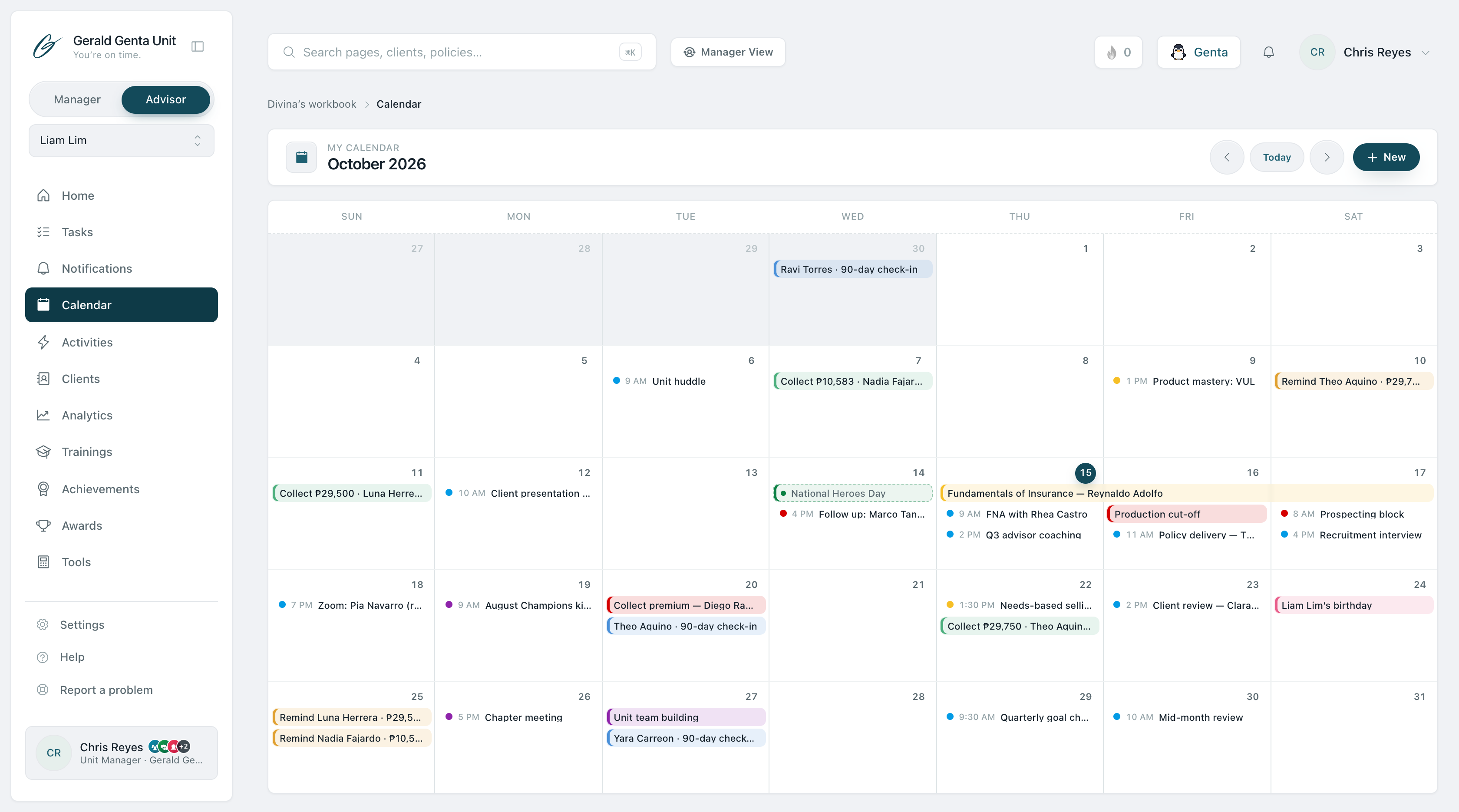
The calendar became a first-class feature. Meetings, servicing work, client birthdays, premium collections with the amounts due, campaign tasks, and 90-day check-ins all land on the advisor's month — and Google Calendar sync keeps the system attached to the schedule the advisor already lives in.
Every advisor gets a smarter workbook
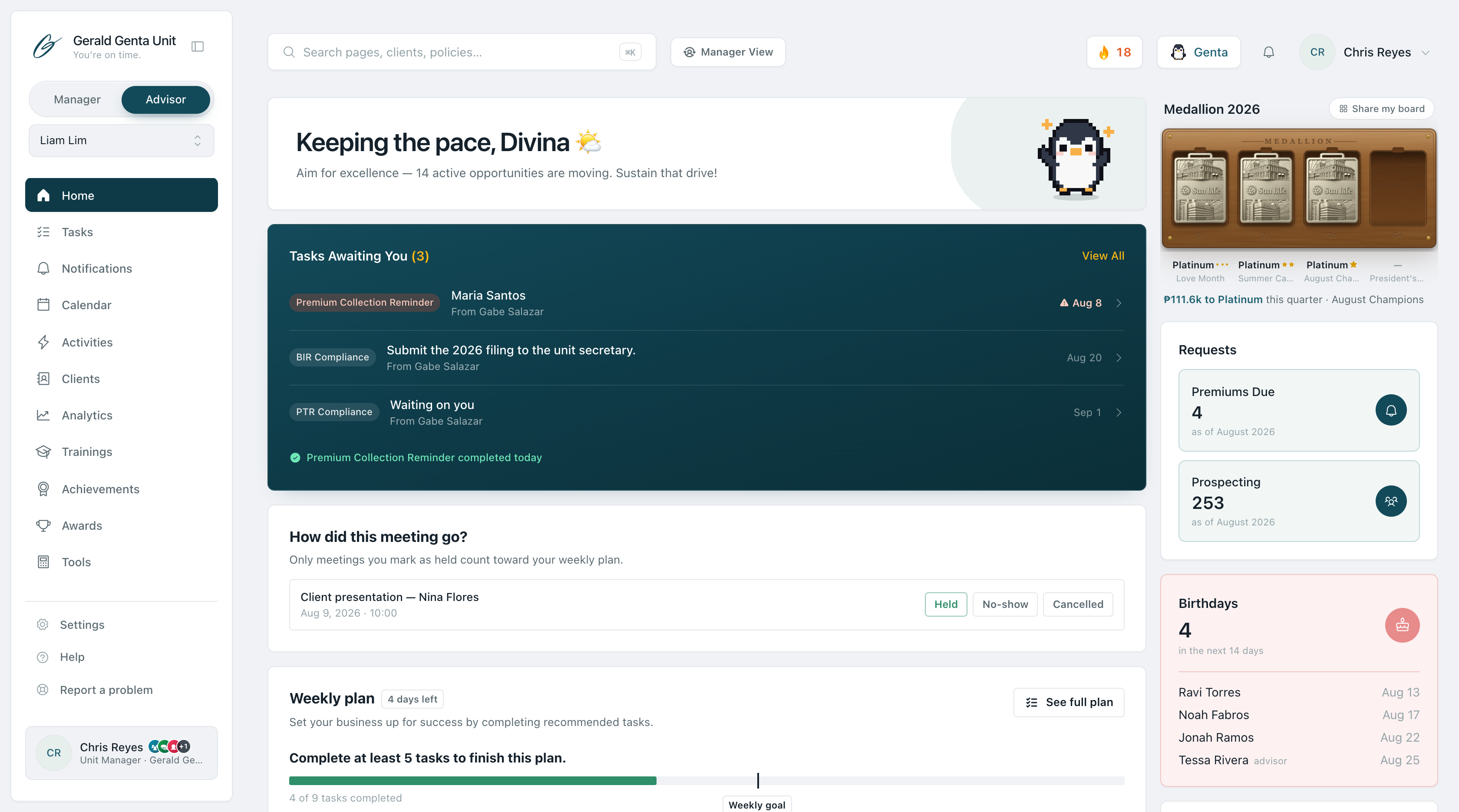
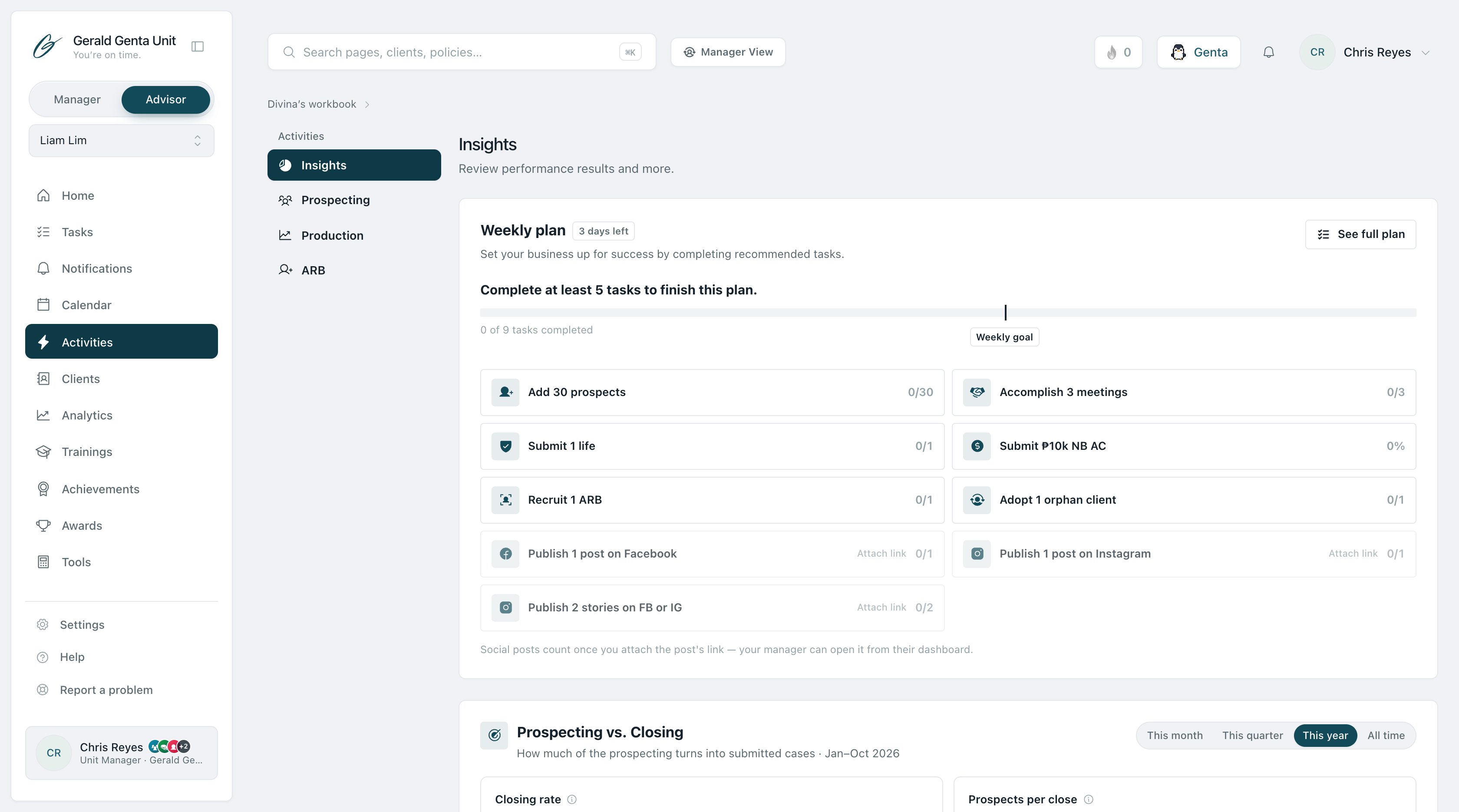
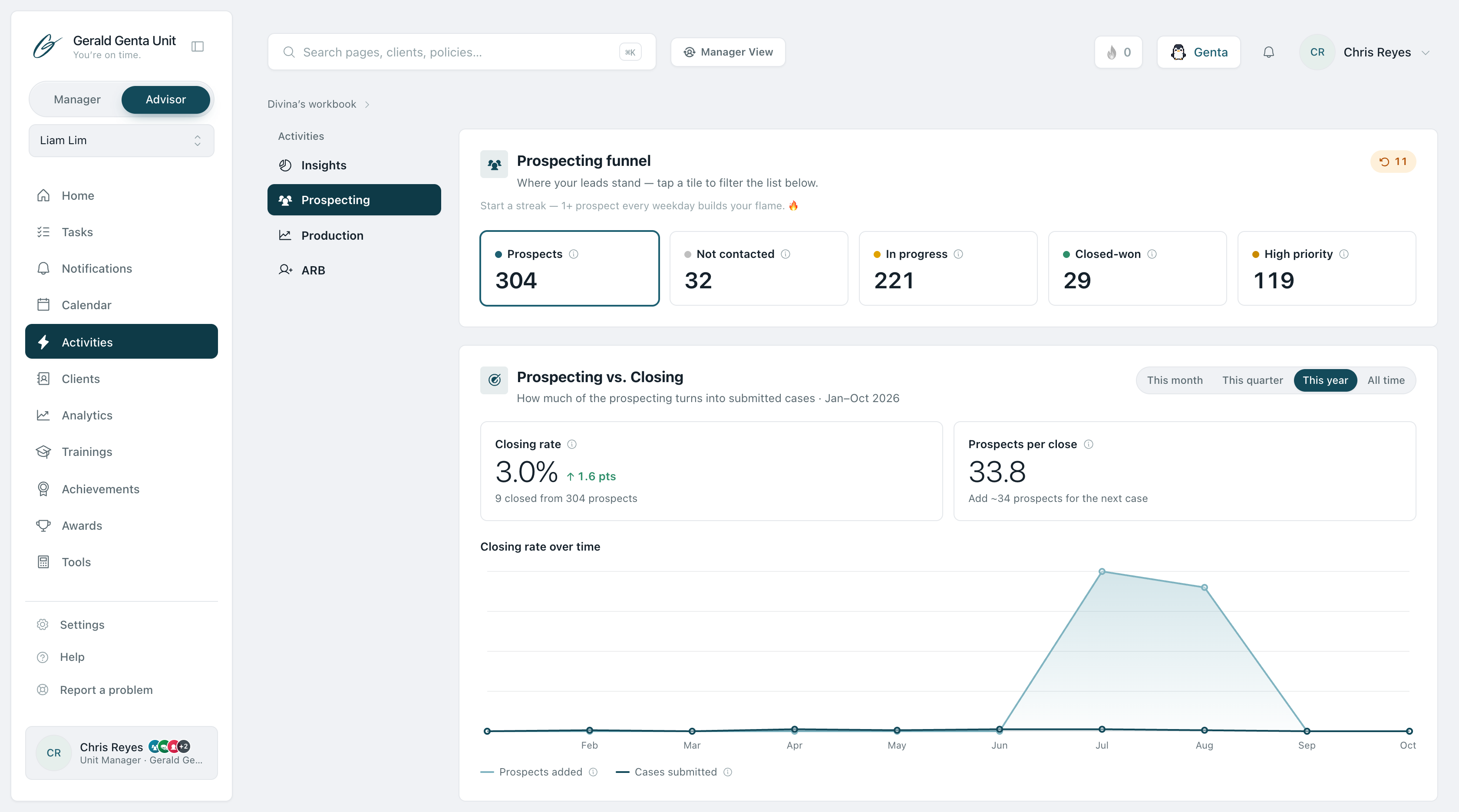
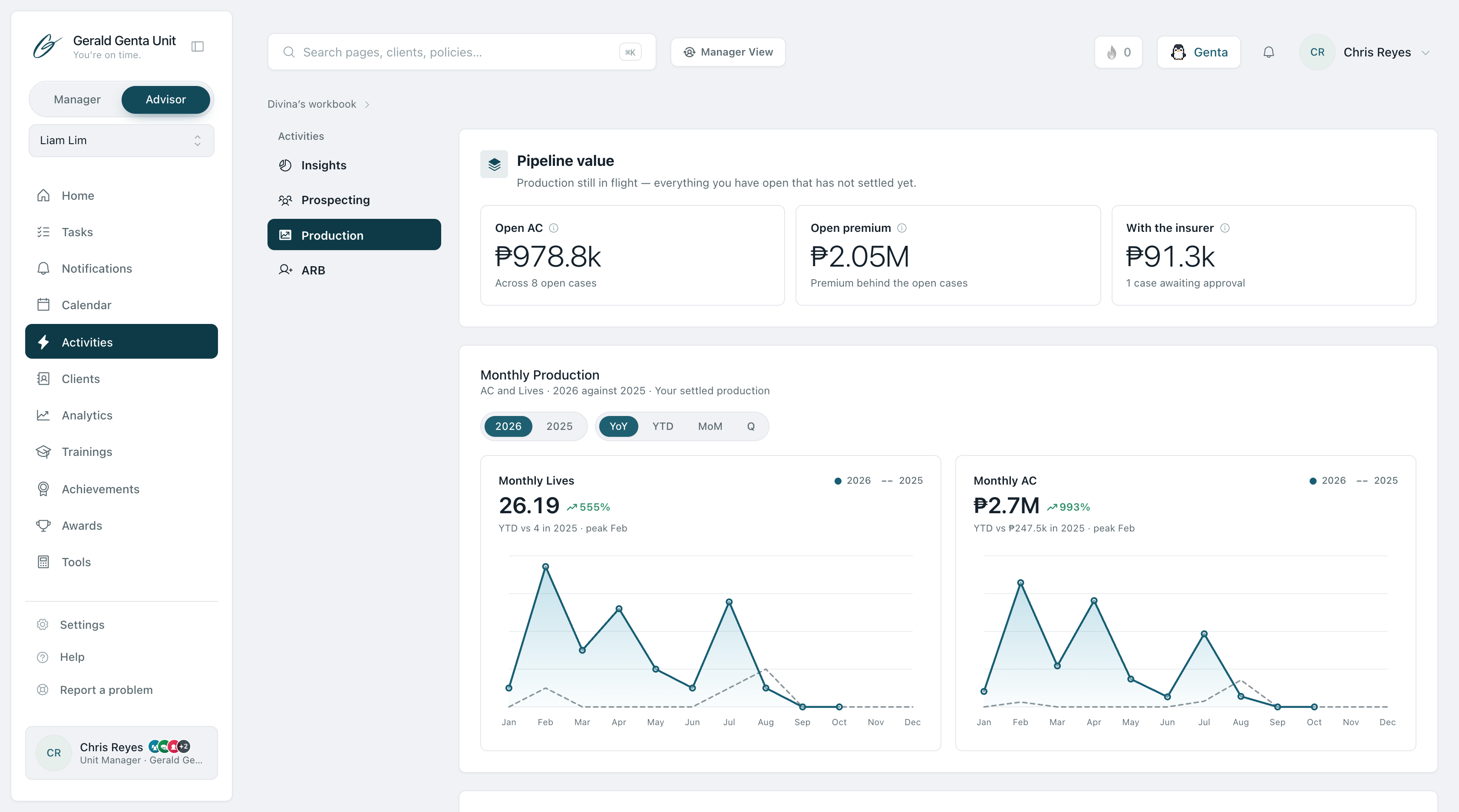
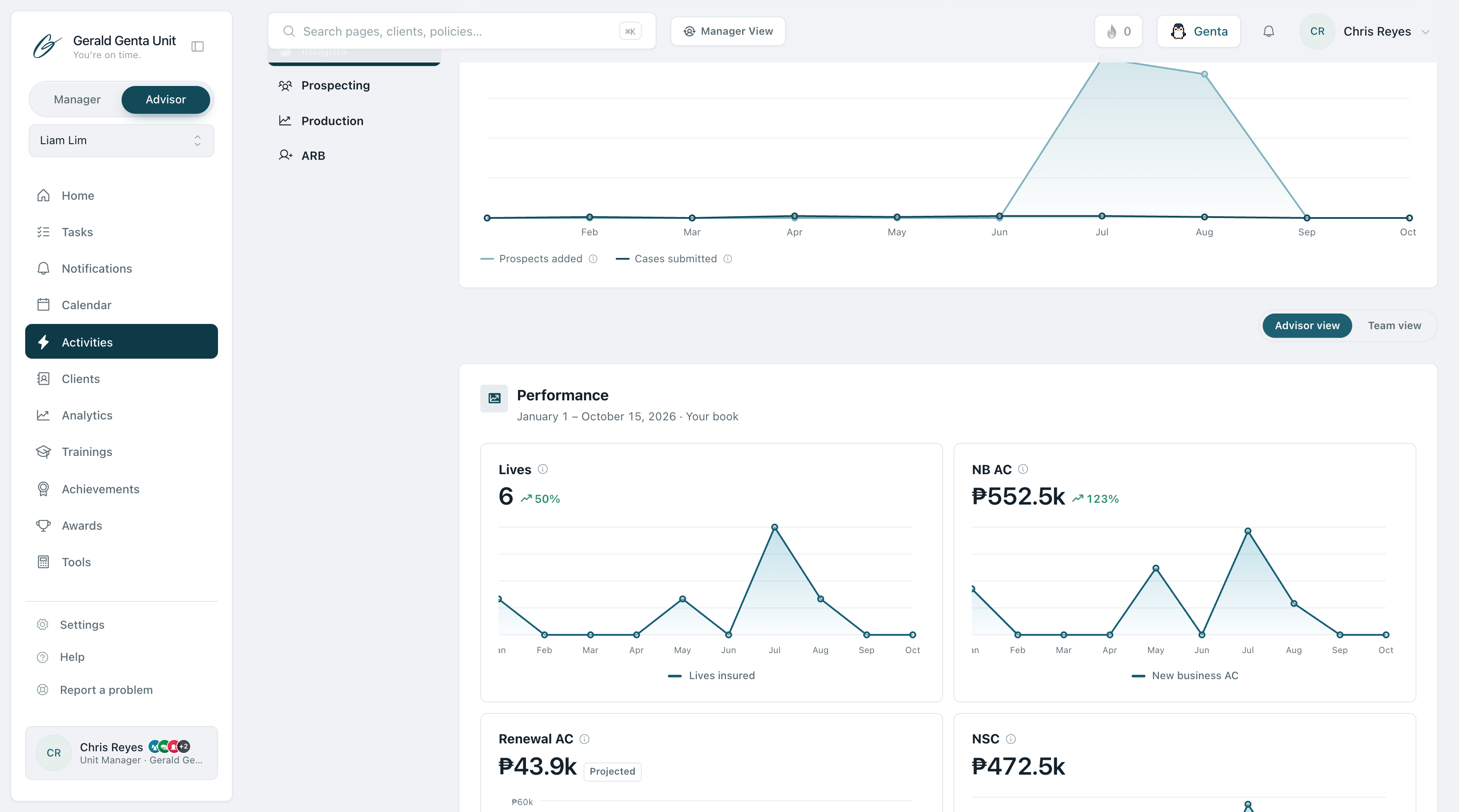
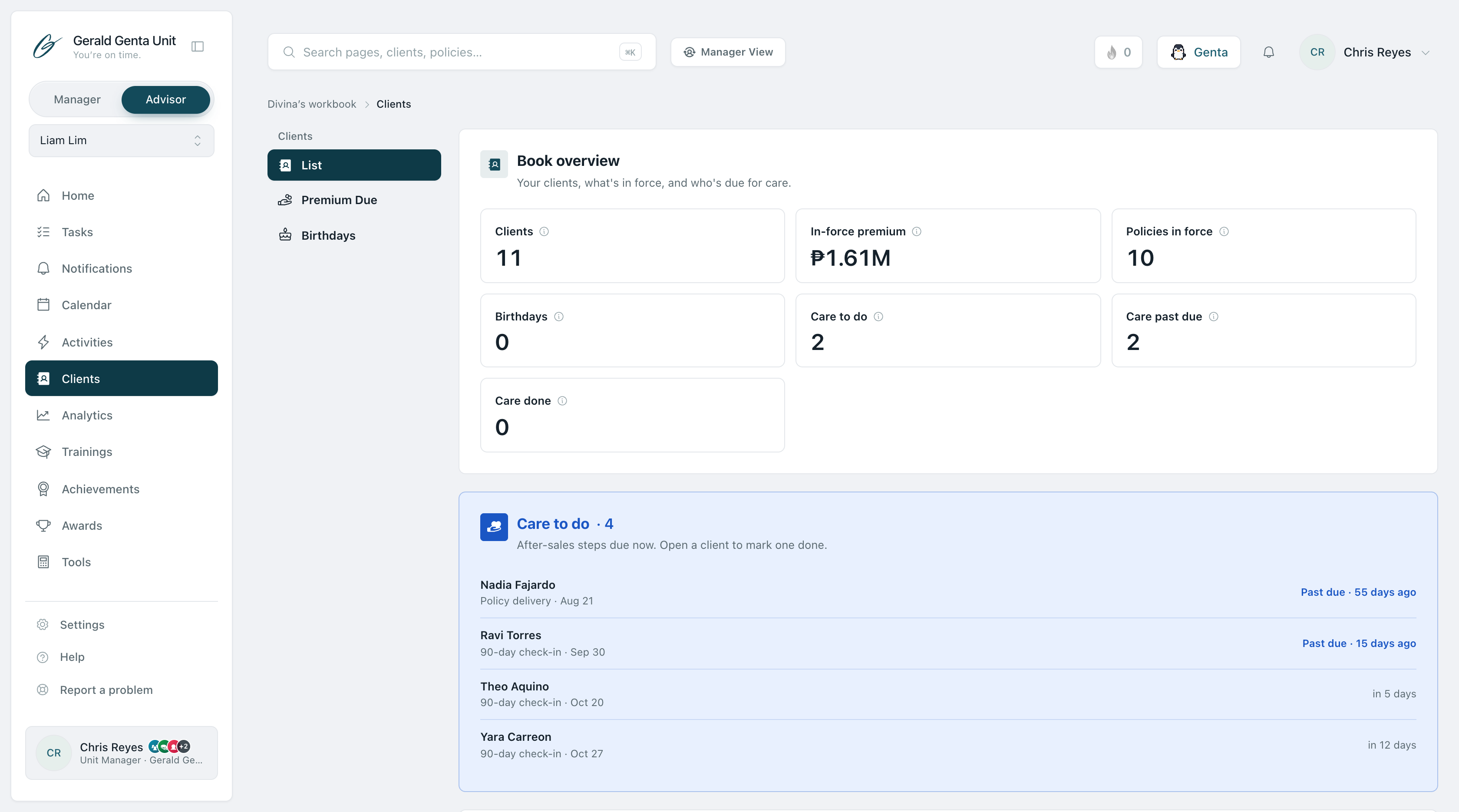
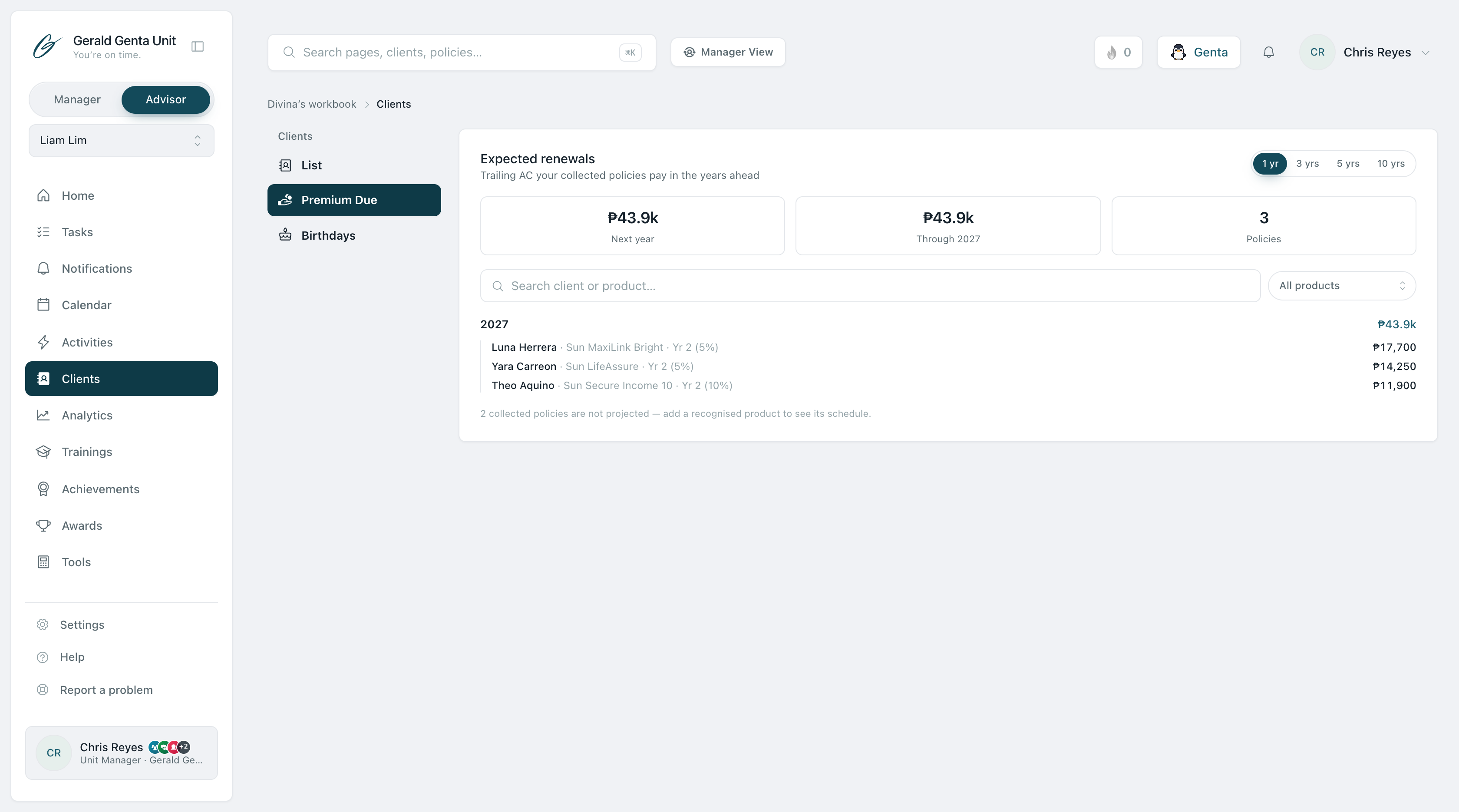
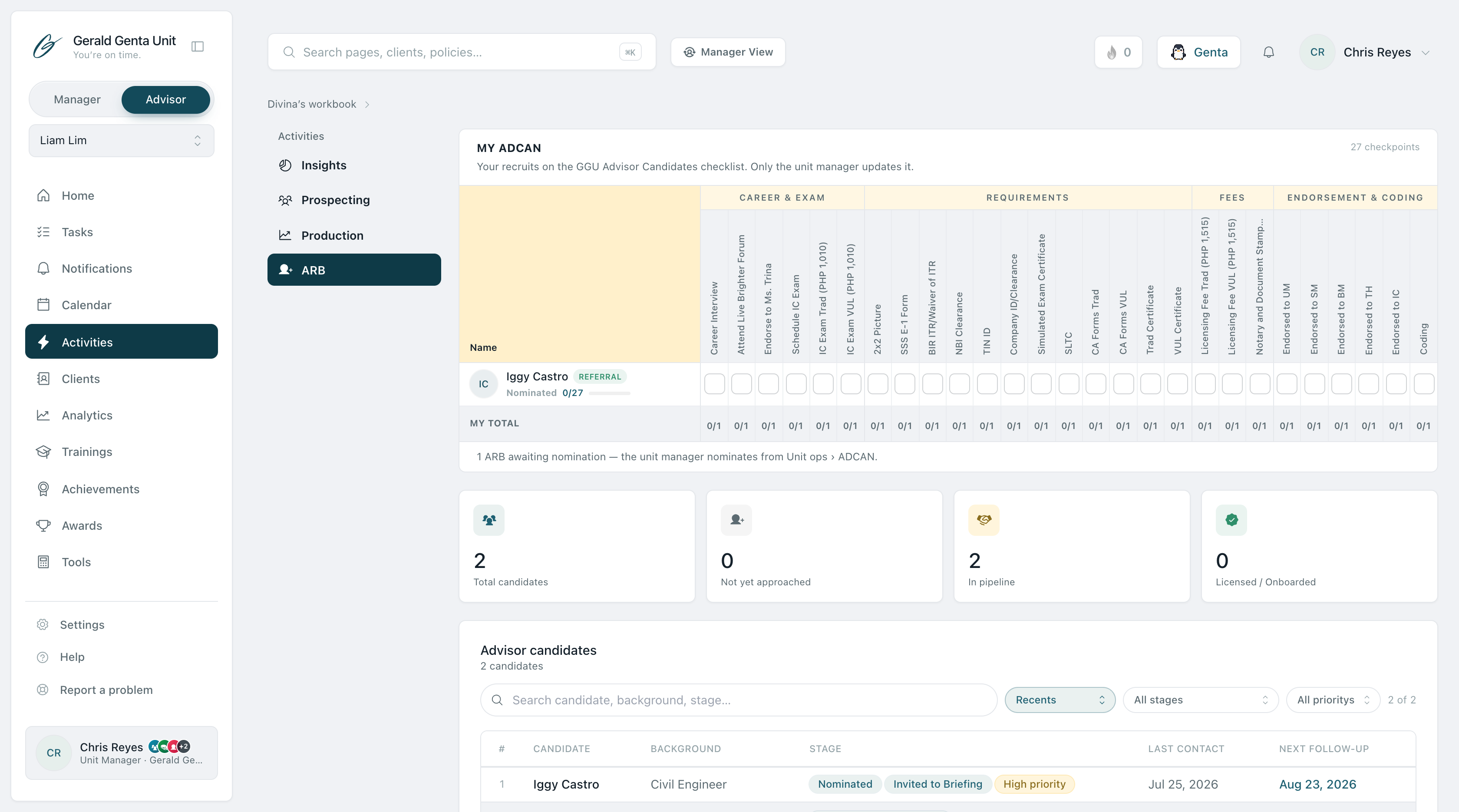
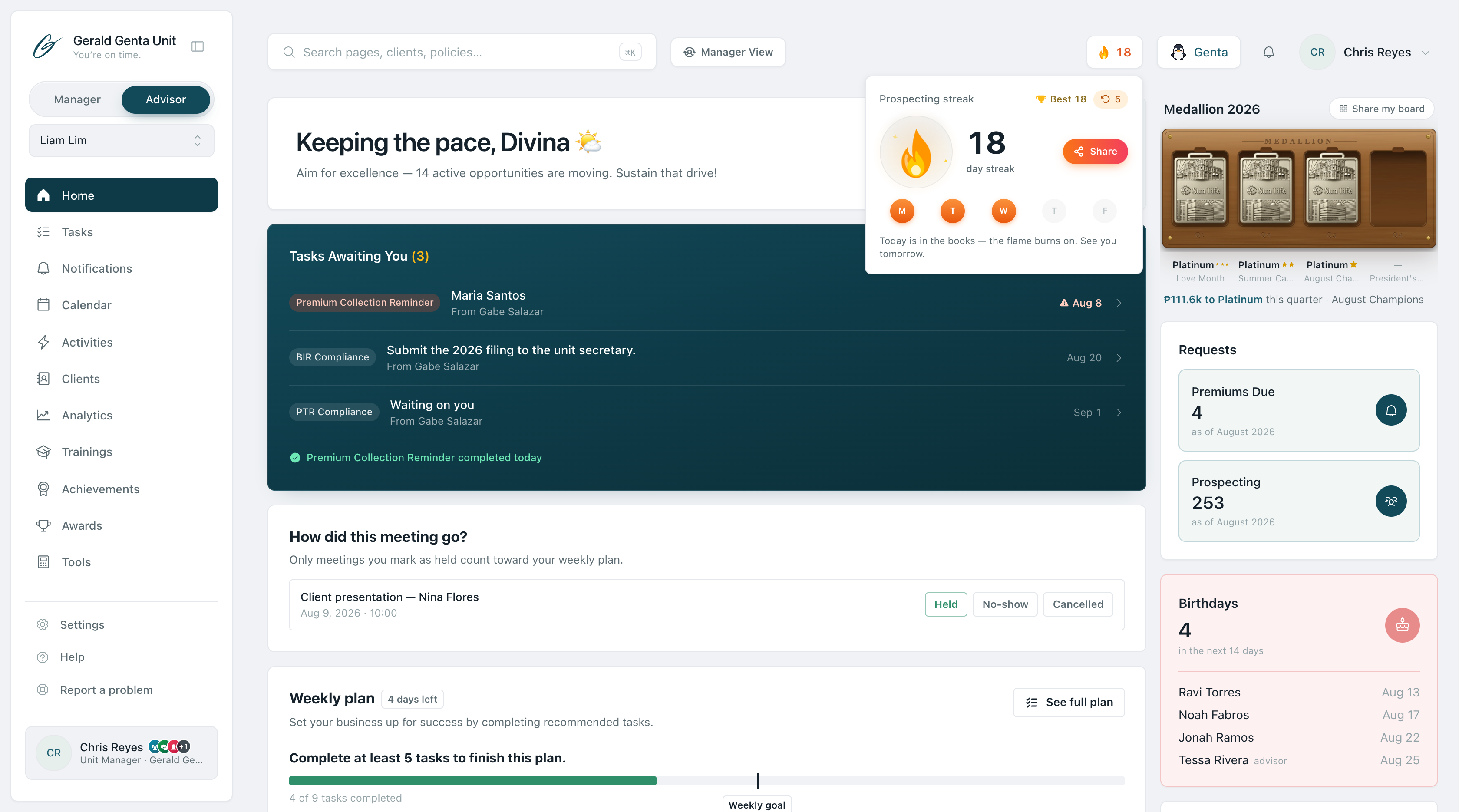
The advisor side is built for daily use: a home page that greets you with what needs attention, a gamified weekly plan, and the full working book — prospects, production, clients, servicing requests, premium renewals, even recruitment candidates of their own. The app carries the checklist work, so client servicing is not dependent on memory or chat threads.
Six weeks after launch
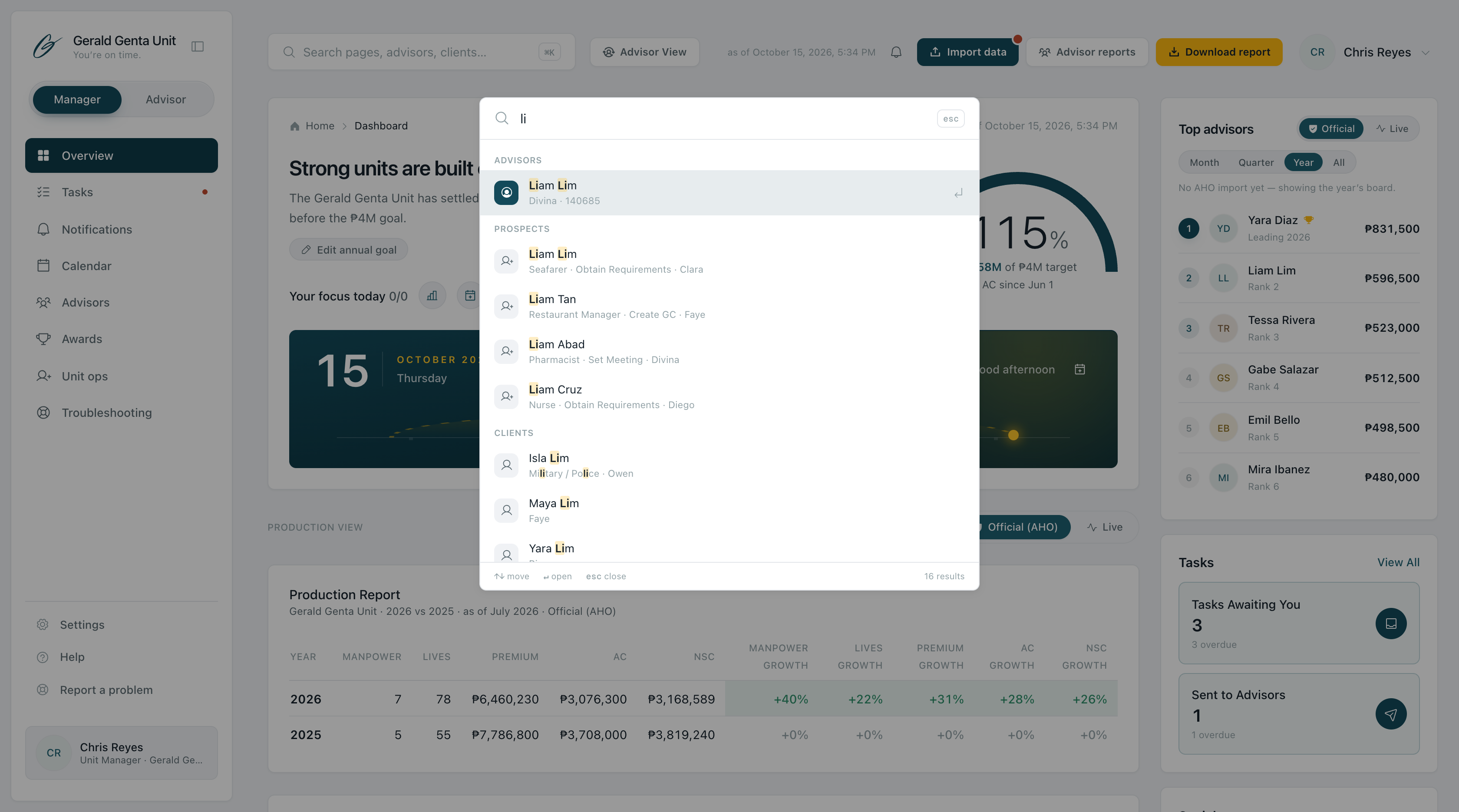
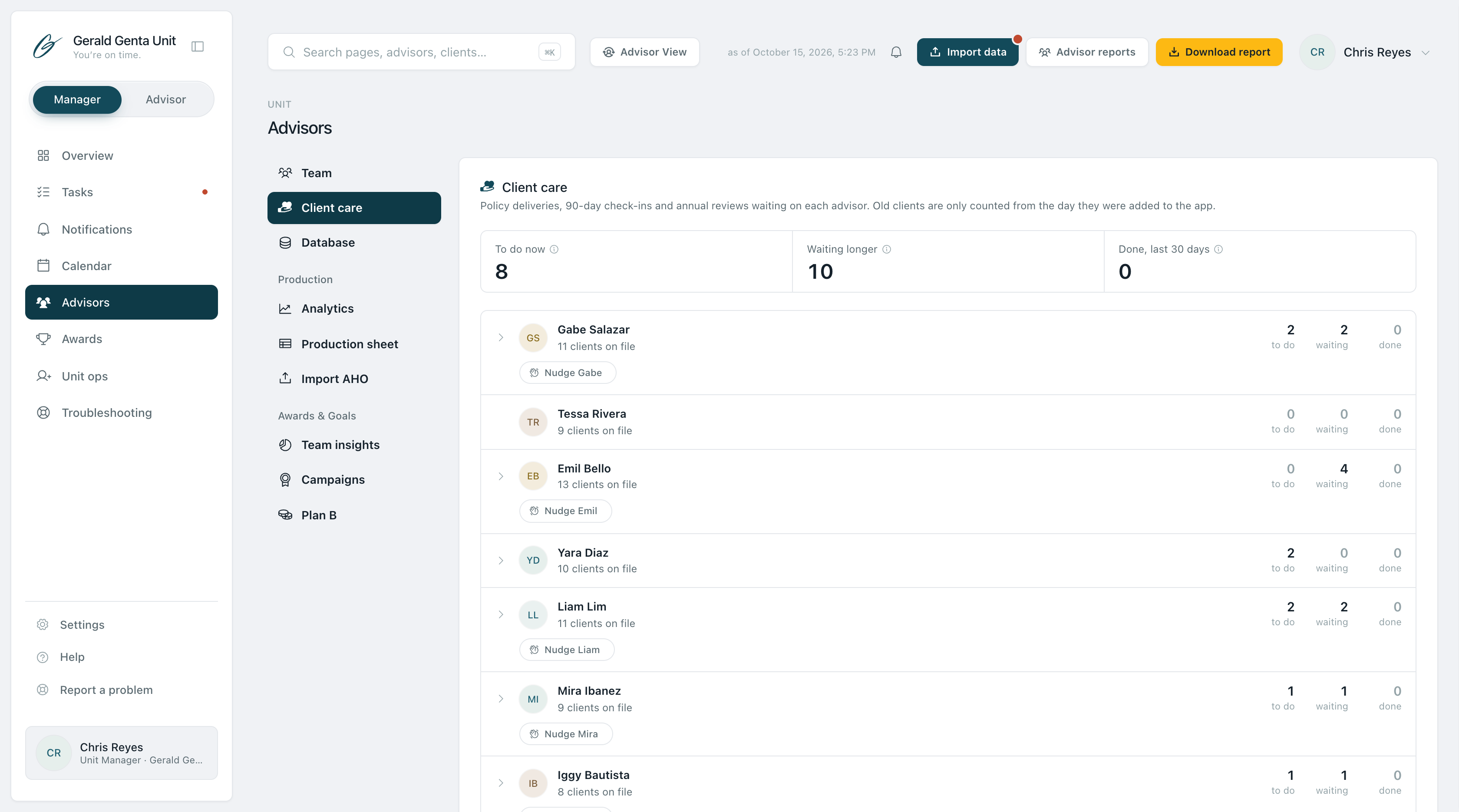
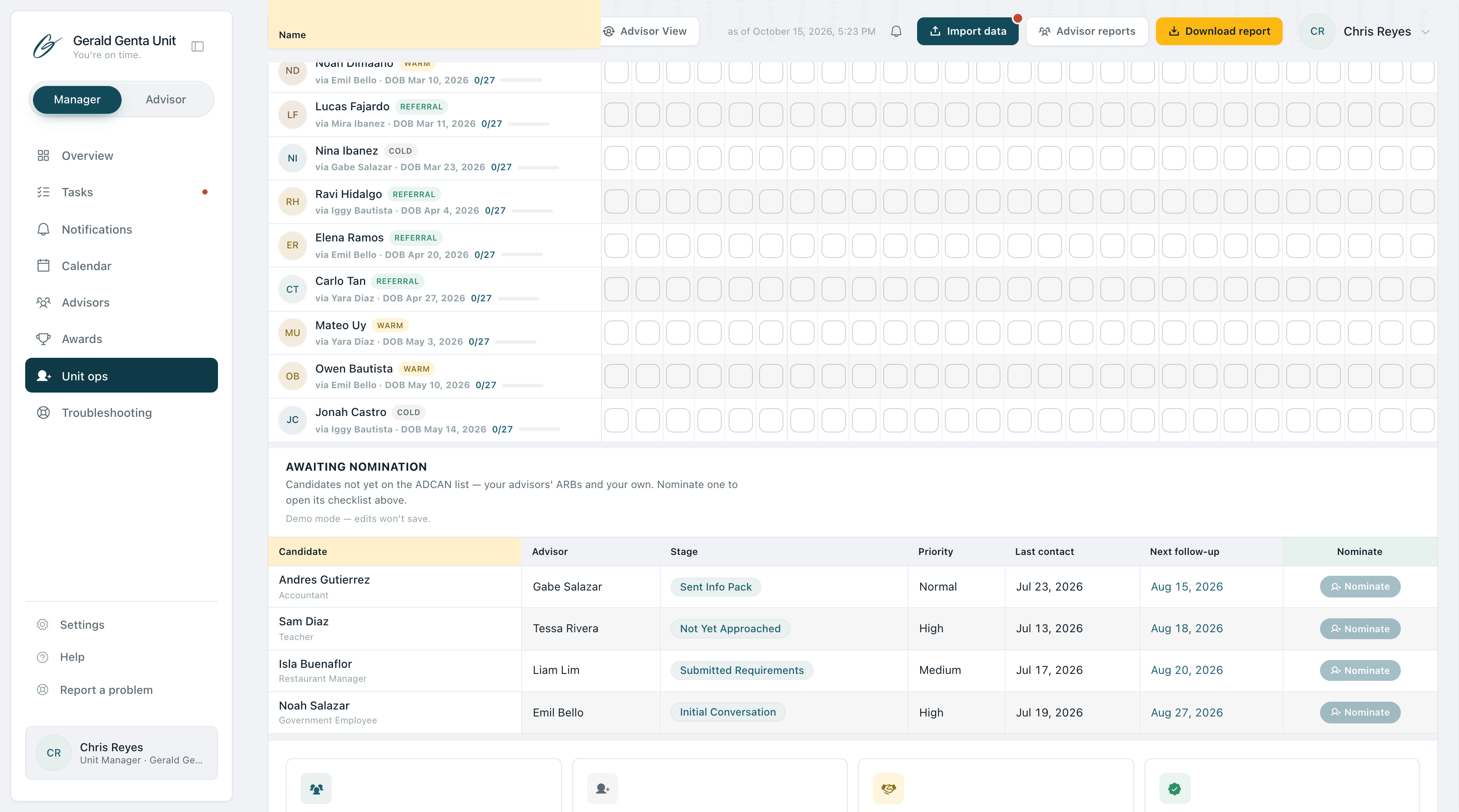
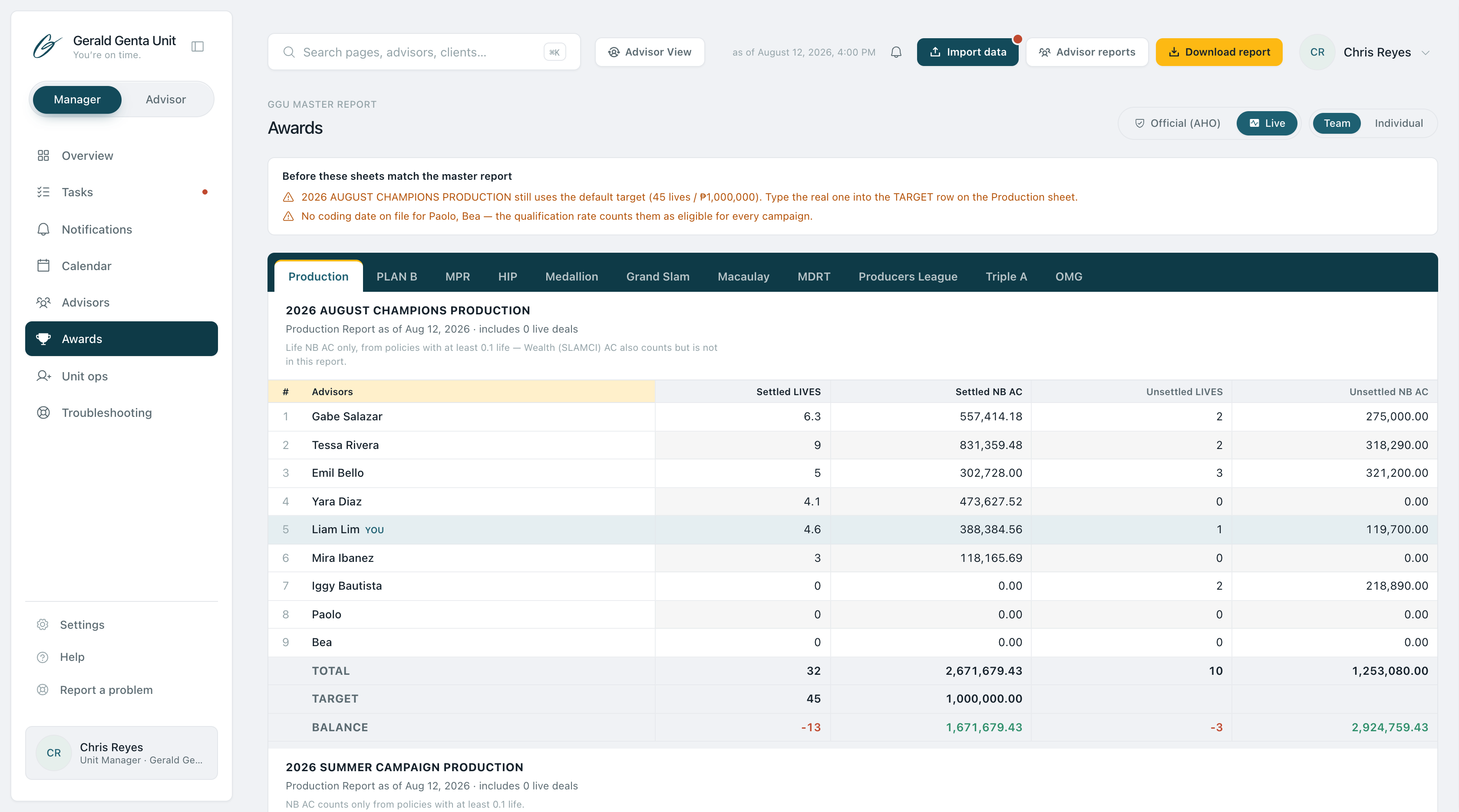
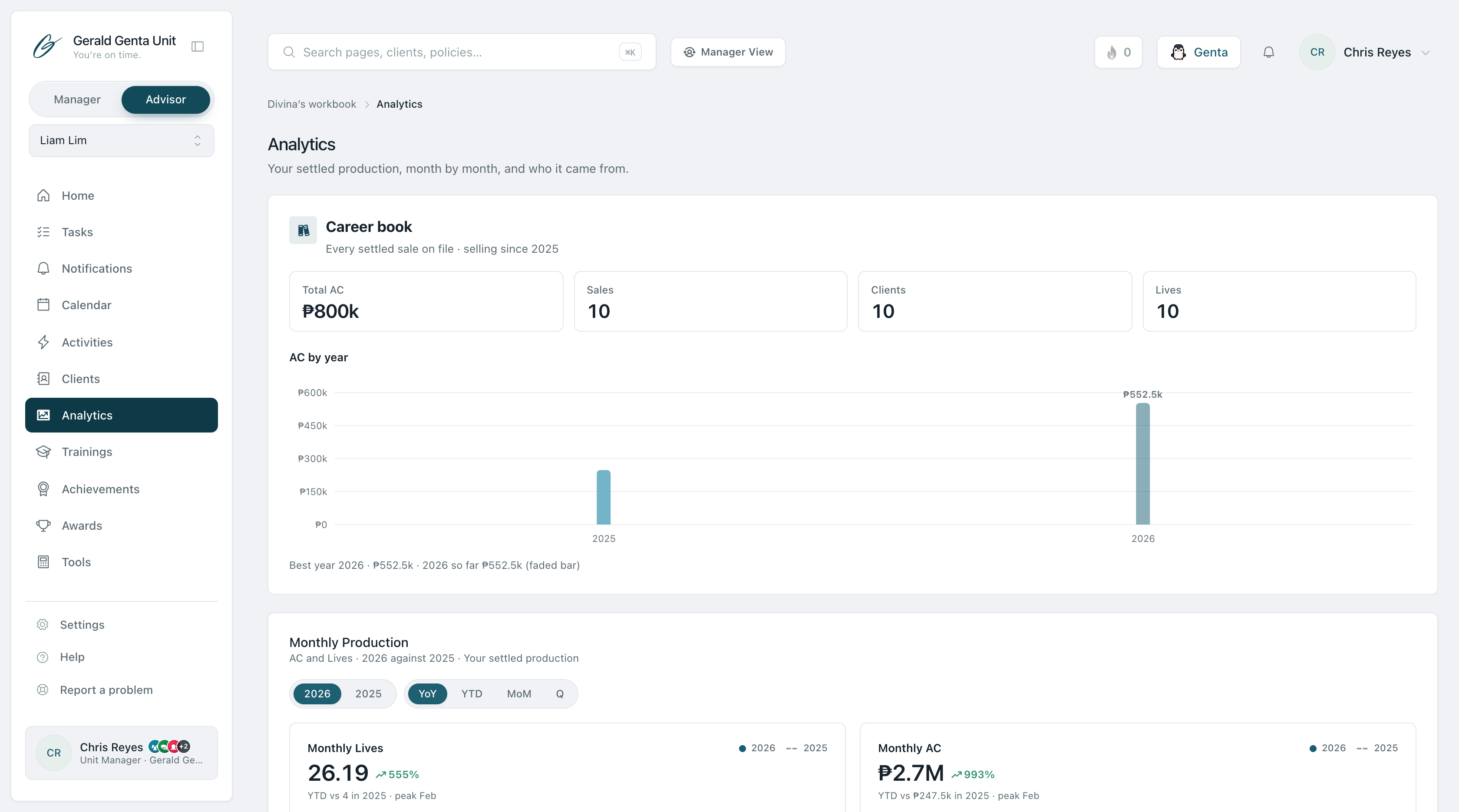
Launch was the start. In the six weeks after it, the unit's requests turned into 190+ commits: a ⌘K command palette that searches clients, policies, prospects and recruits; an after-sales care tracker for policy delivery, 90-day check-ins and reviews; award sheets for every company contest plus ADCAN nomination tracking; scheduled email digests over Gmail with a log of every send; in-app troubleshooting tickets that only close when the reporter confirms the fix; manager nudges with read receipts; Sentry on every API route with personal data masked; and dark mode.
October: medals, statements, and a show reel
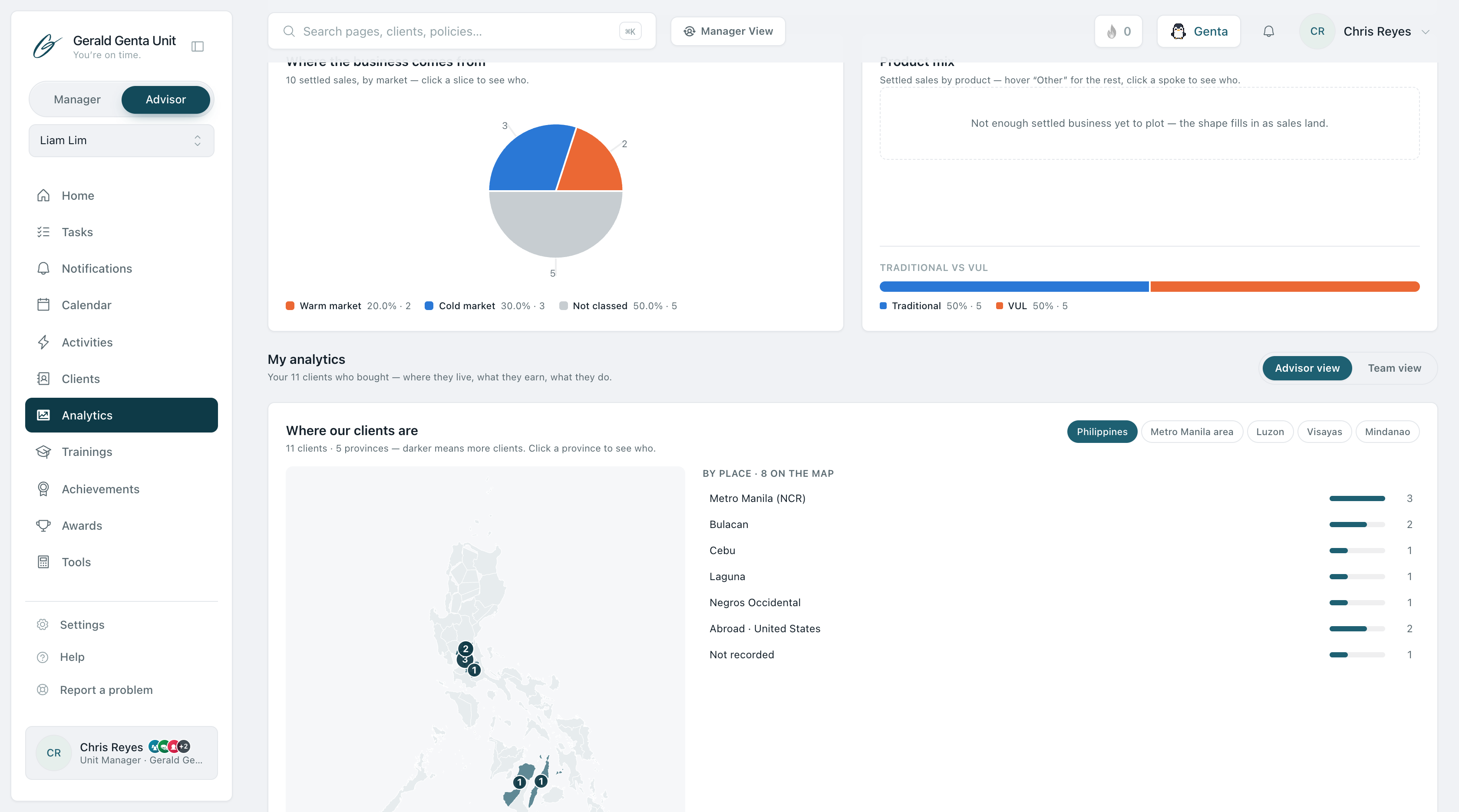
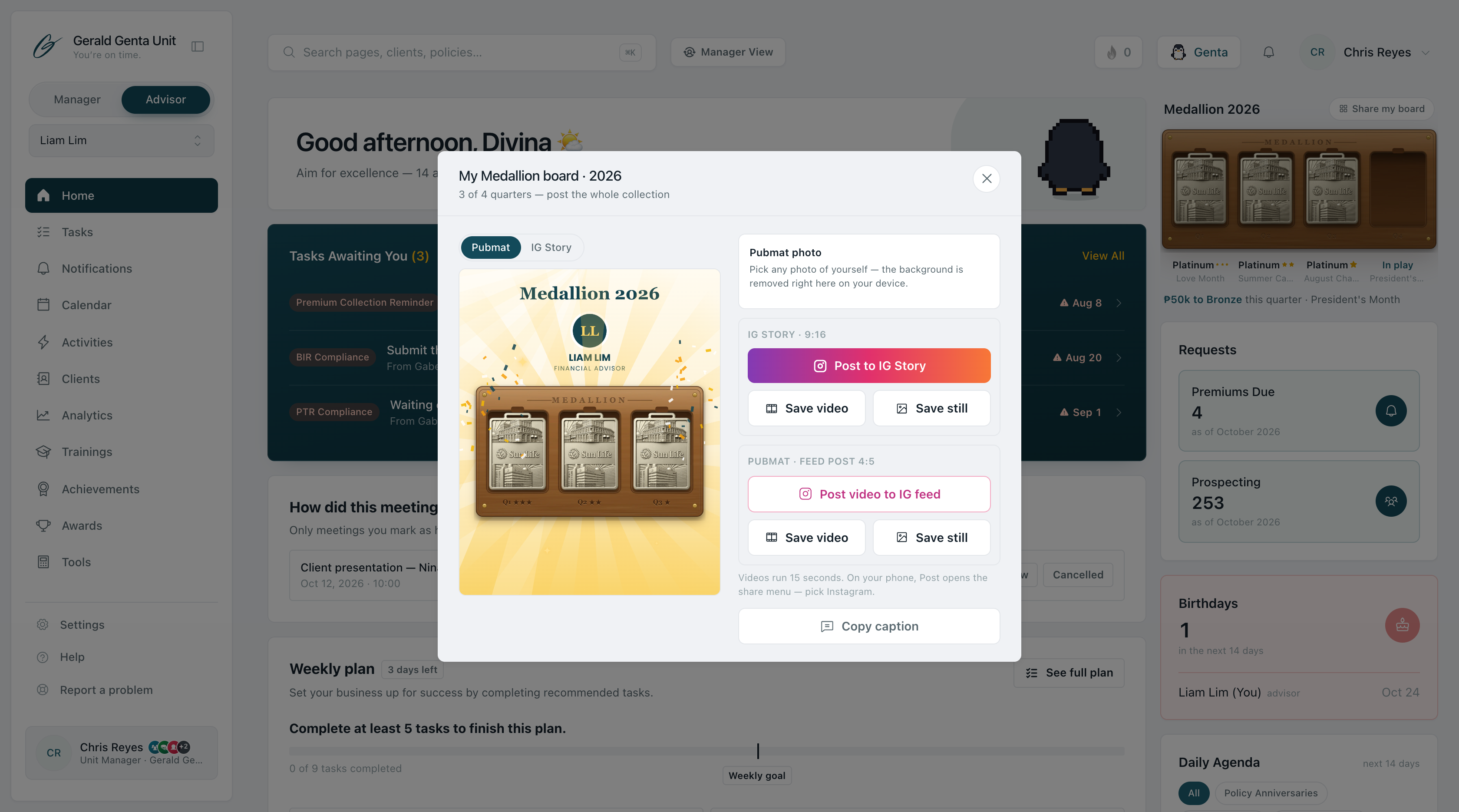
The pace did not drop. In October alone the app picked up another 50 commits. Each advisor's Home now carries a Sun Life Medallion board: four carved plaques, one per quarter, filled from the official Medallion rules. A medal earned for the first time plays a three-act unlock: the medal alone, a celebration behind it, then a flight into its seat on the board. The share screen renders an Instagram story video, a feed video, and a unit-style pubmat entirely on the device in a canvas, with the advisor's photo cut out in the browser.
The prospecting streak got the same treatment. It is now a match-lit fire that strikes, catches, and grows into a new colour at every milestone, with a shareable streak post. Anything missed can be replayed from Genta's popover.
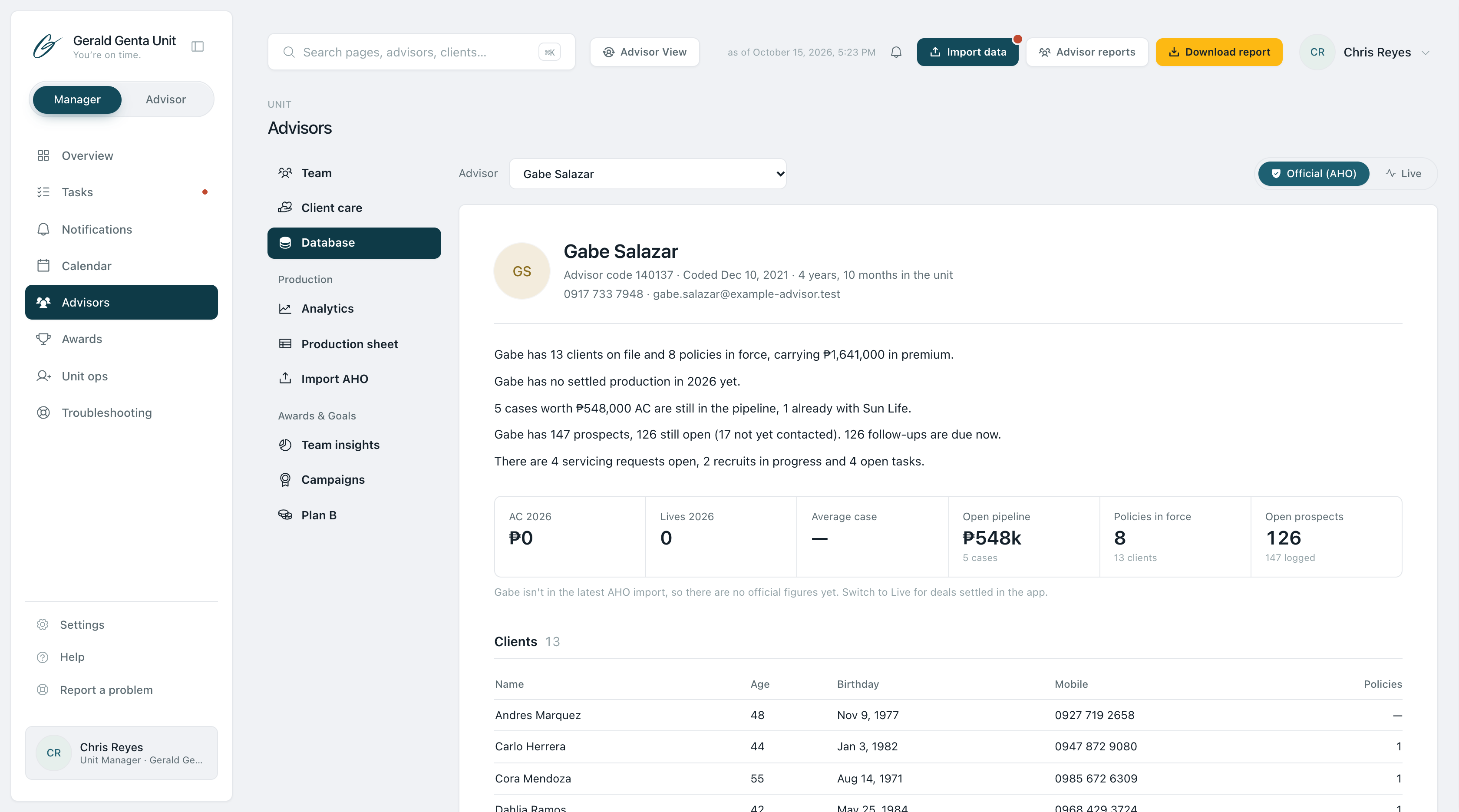
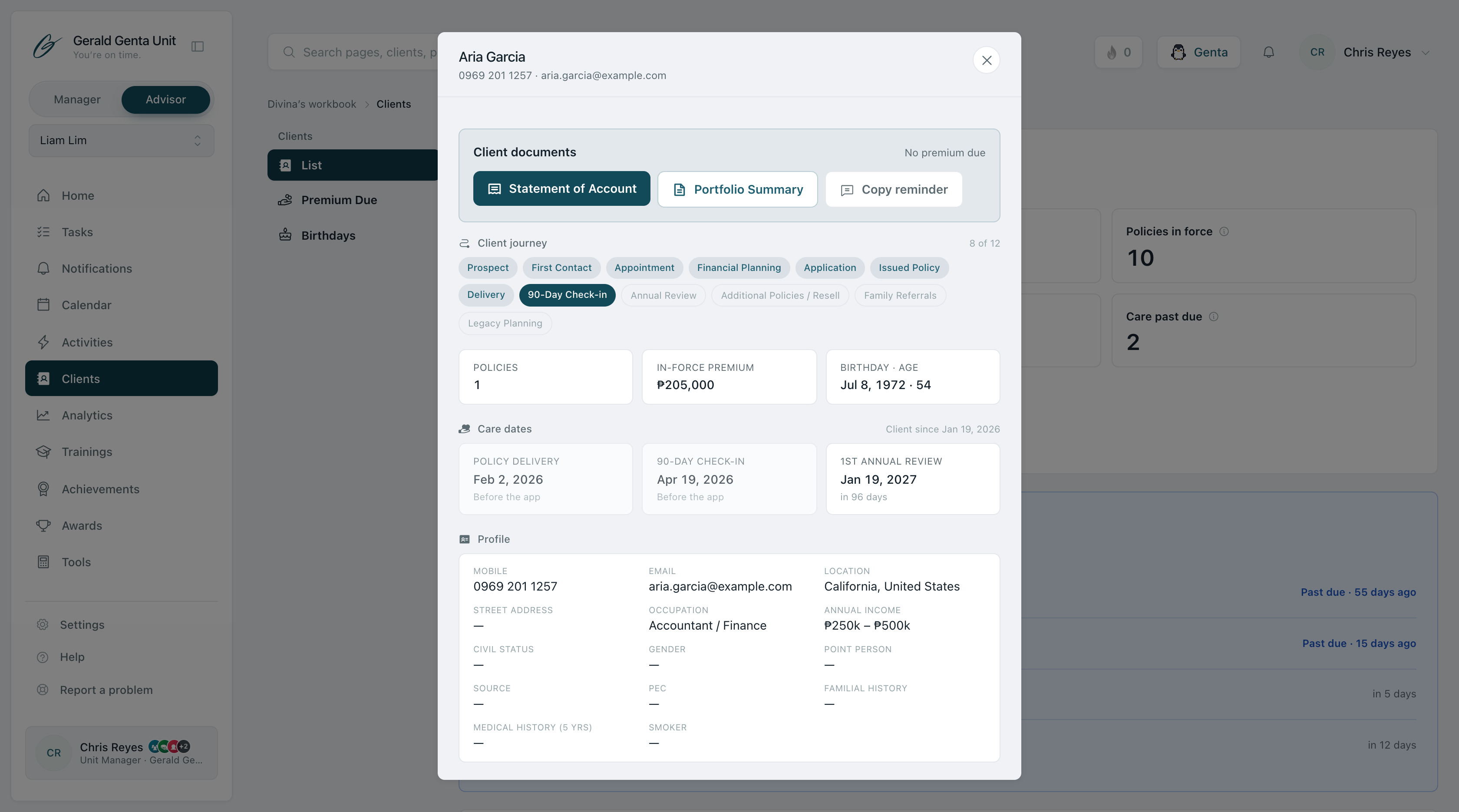
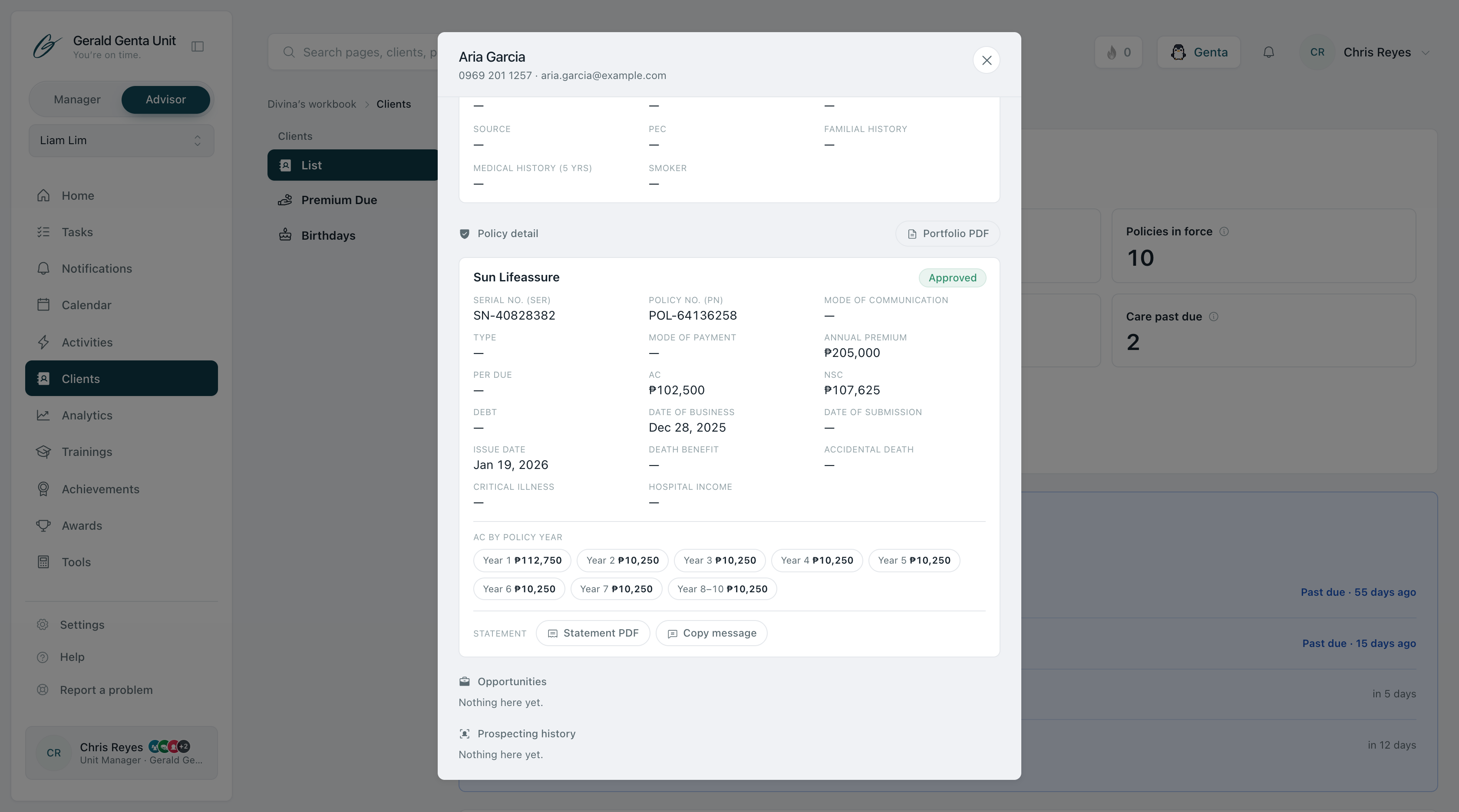
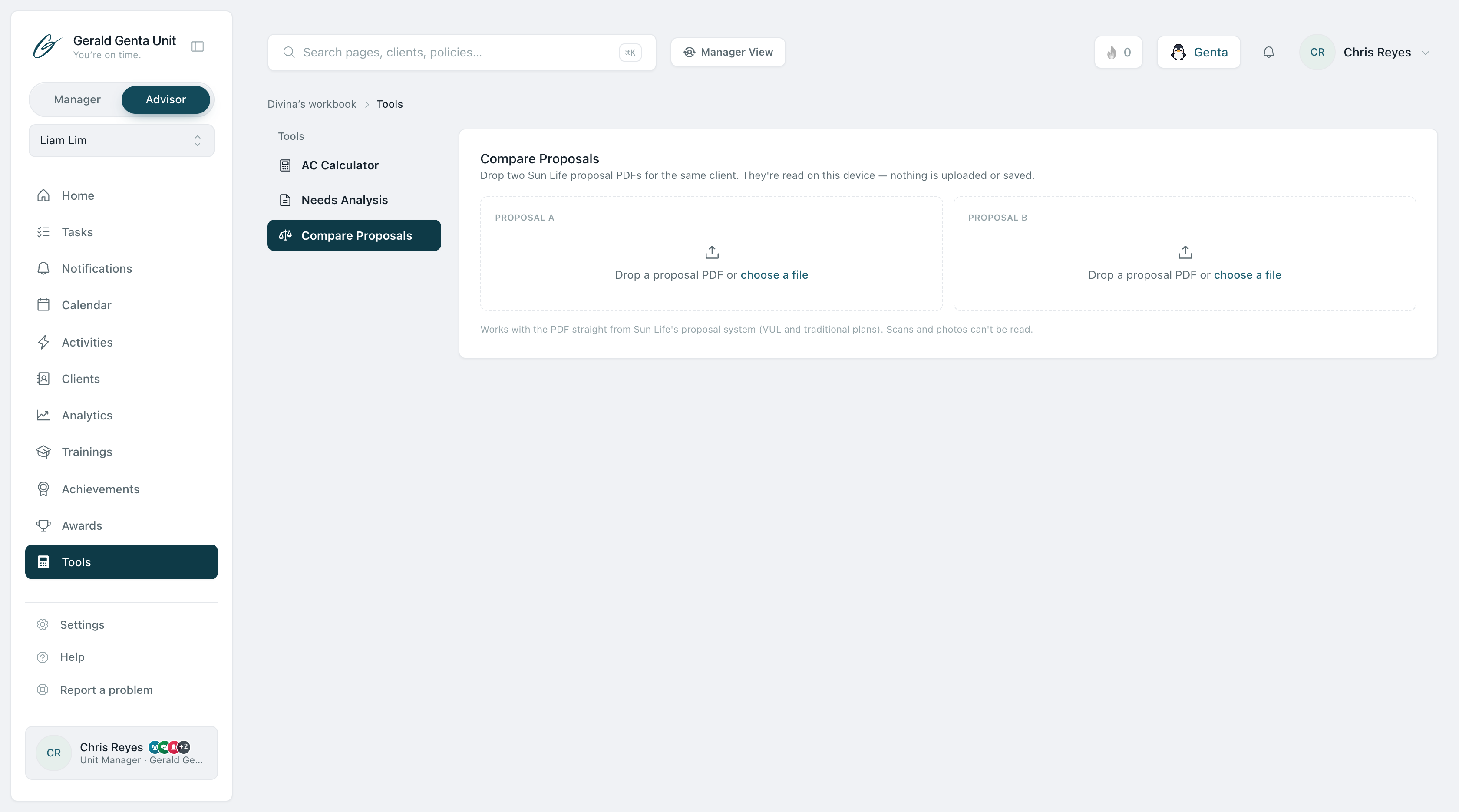
The serious side grew too. Every client page opens on a documents bar that prints a Statement of Account and a Sun Life Portfolio summary as PDFs, and premium dues now send a 30 / 14 / 3-day reminder ladder. Compare Proposals reads two Sun Life proposal PDFs in the browser with pdf.js and lines them up rule by rule, so nothing is uploaded. The manager has an Advisor Database page for any advisor, and the sign-in screen became a show reel of the app's own animations.
Managers can still open any advisor's view to coach them, but that view is now read-only for popups: looking at someone's medal unlock or notice no longer uses it up for them.
Genta teaches the app
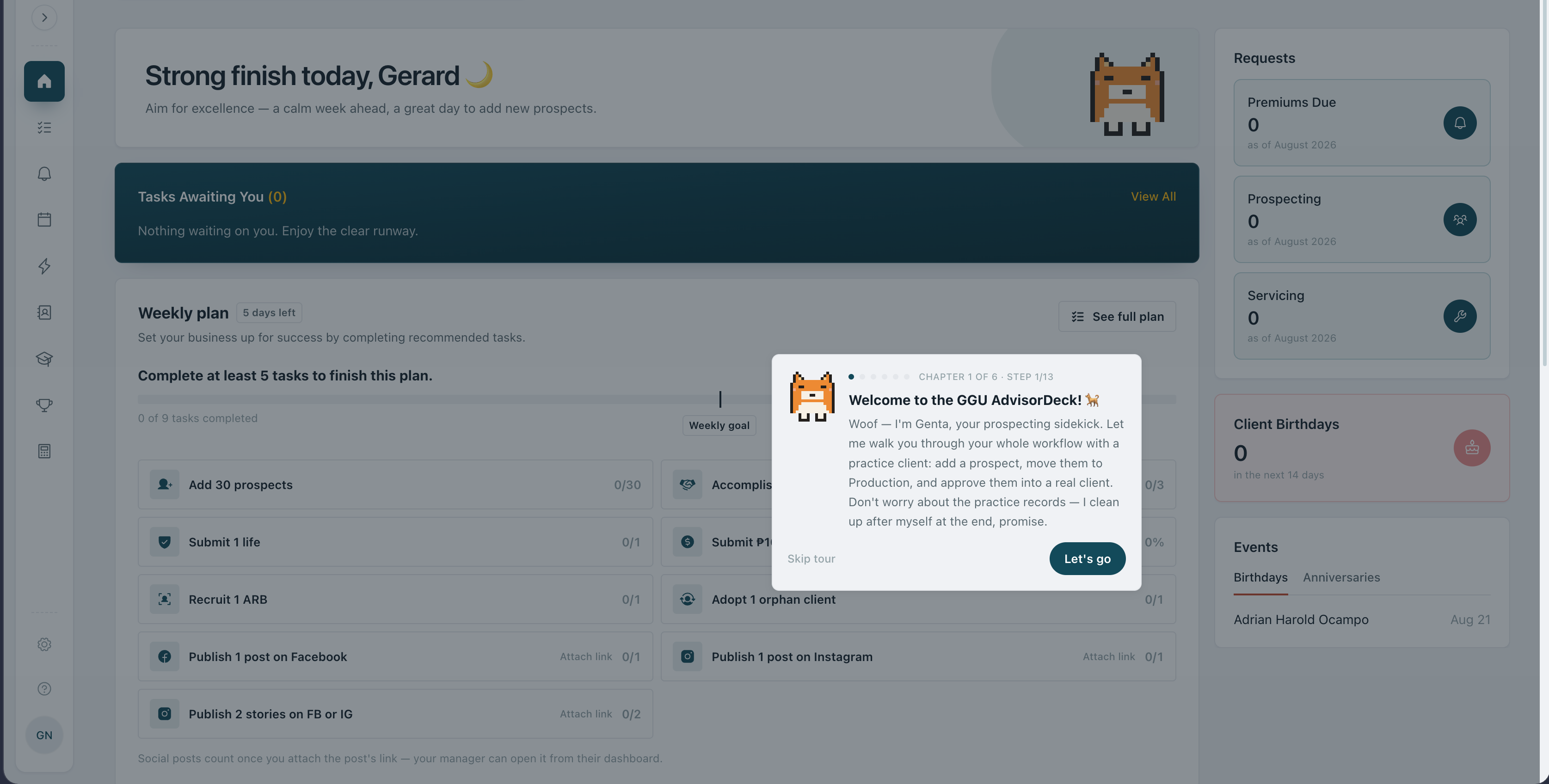
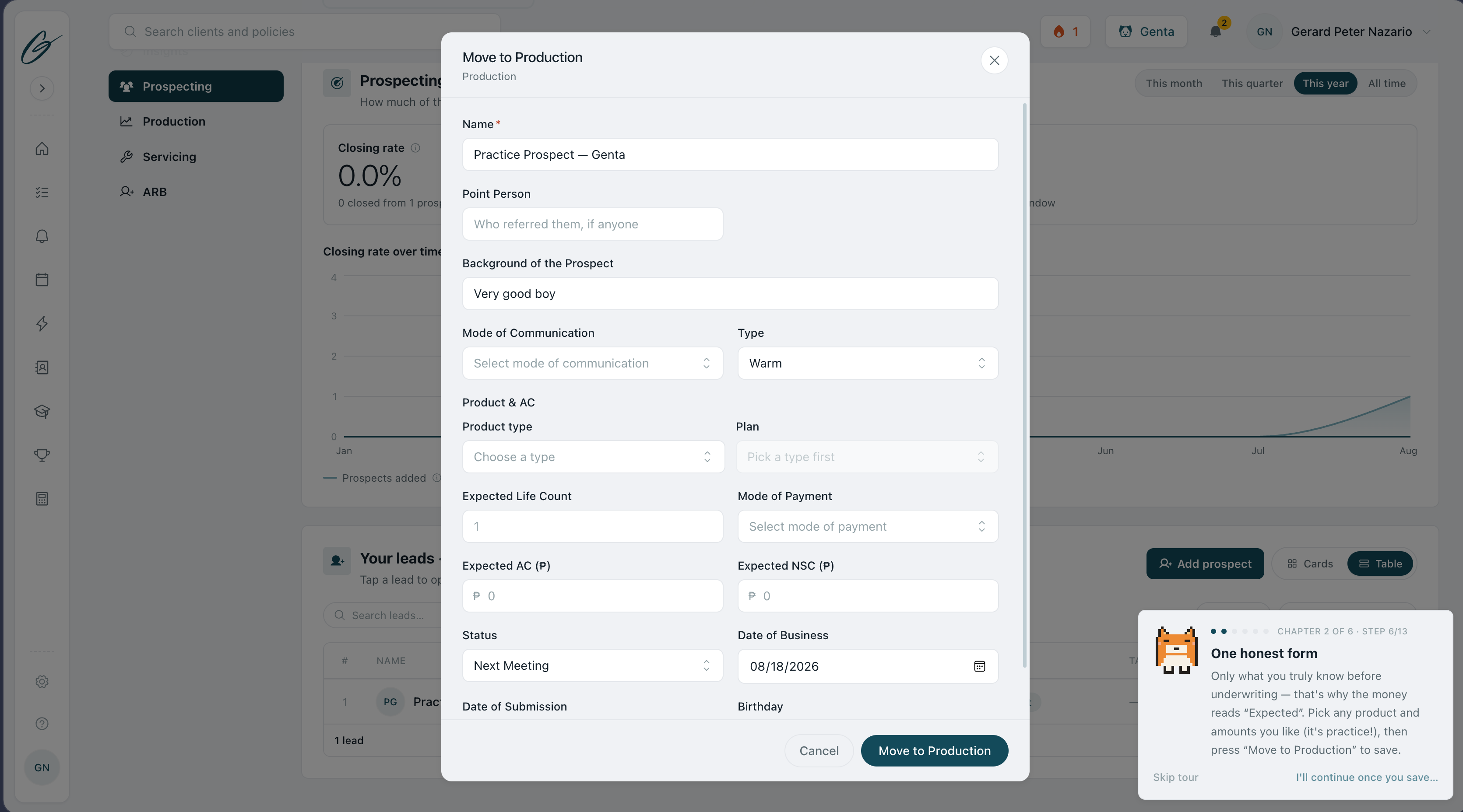
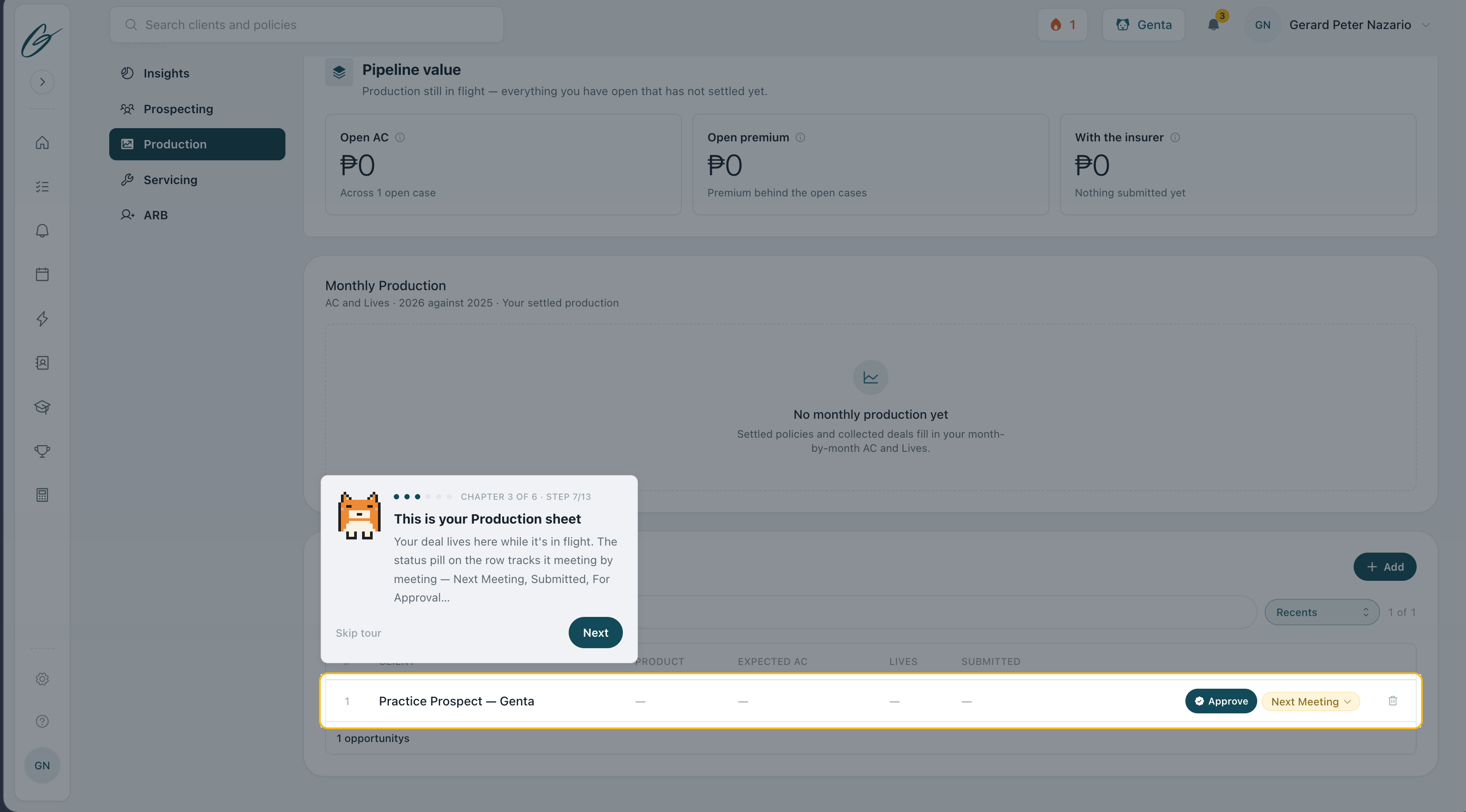
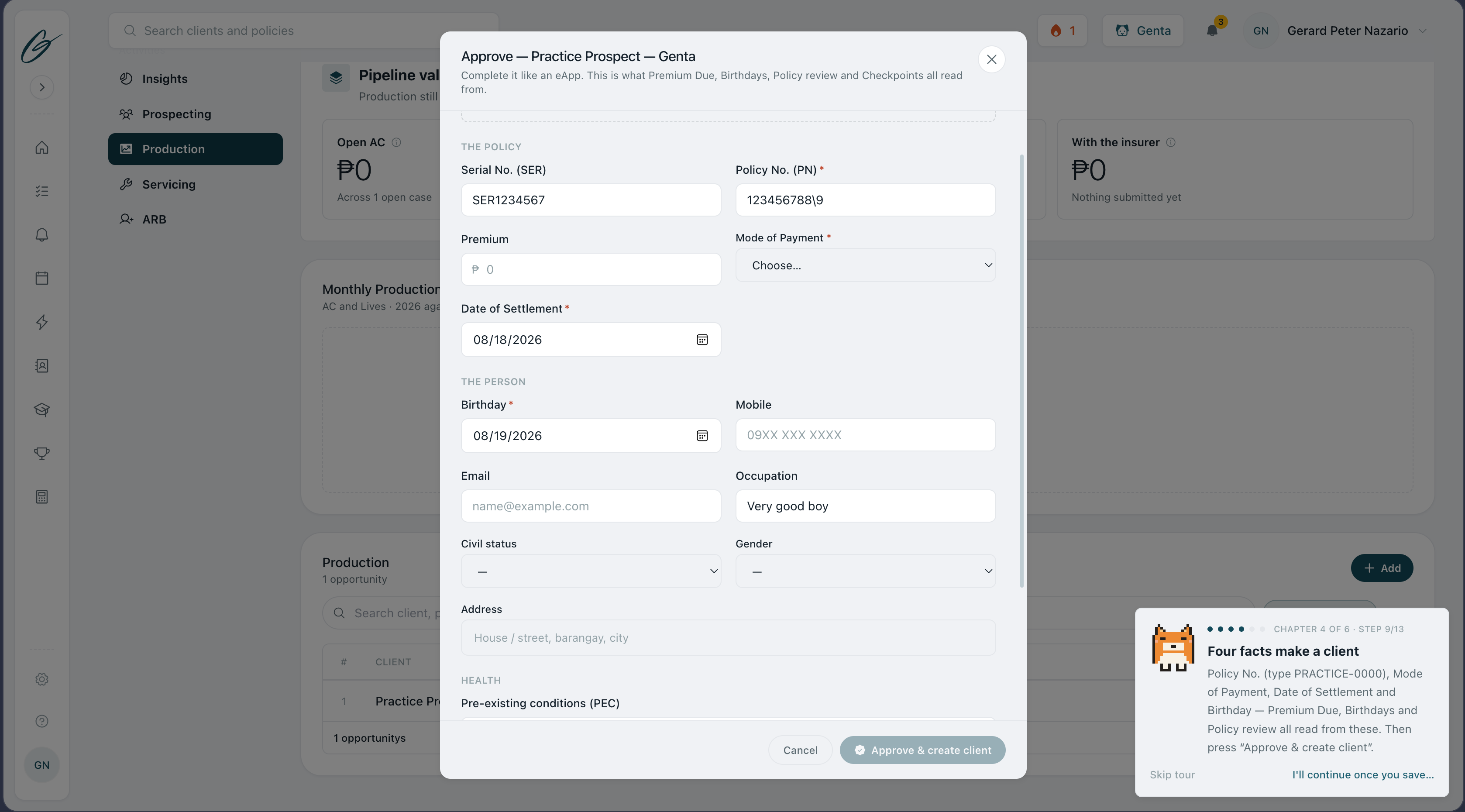
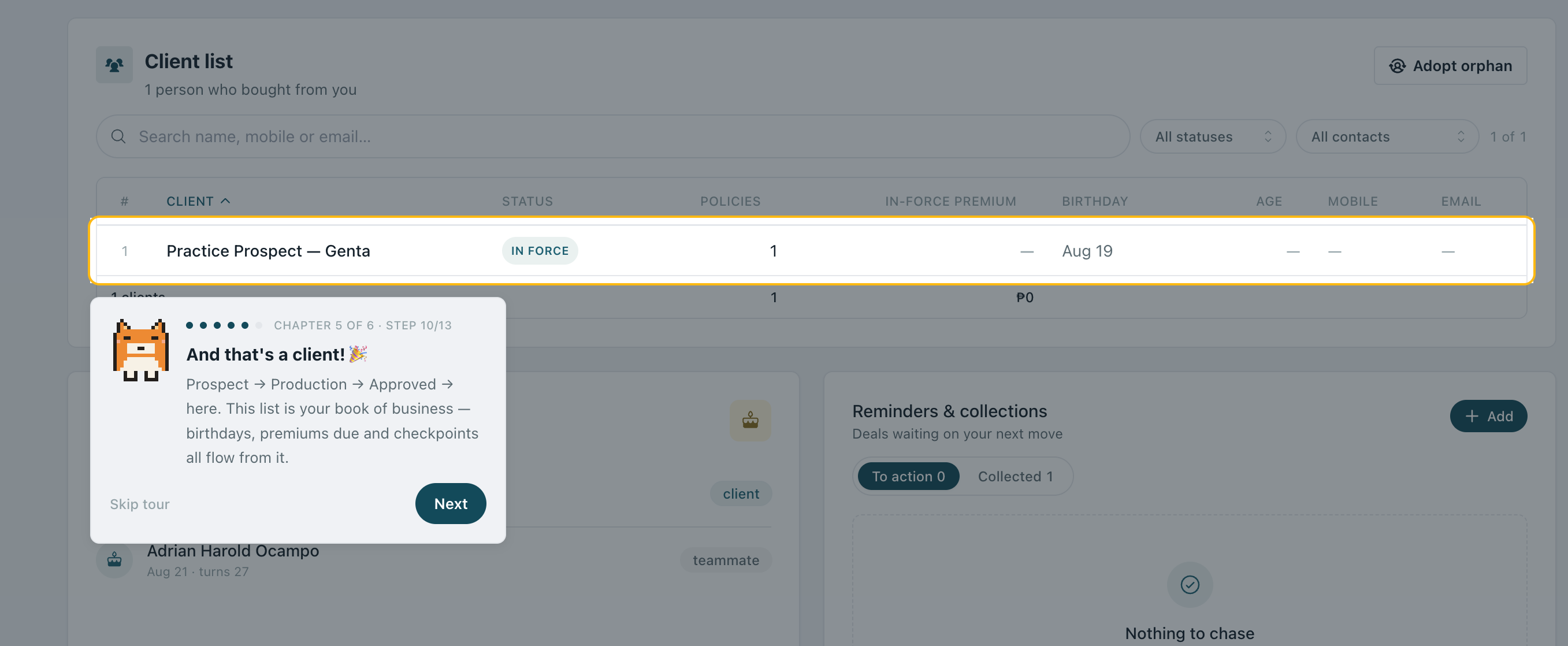
New advisors do not get a manual — they get Genta, the unit's pixel penguin, and a 13-step interactive tour. The tour creates a practice prospect and walks the advisor through the real lifecycle: log the lead, move it to production, fill the approval form, and watch it become a client on the book. When the tour ends, the practice records clean themselves up, and the whole thing can be replayed from Help.
 Welcome
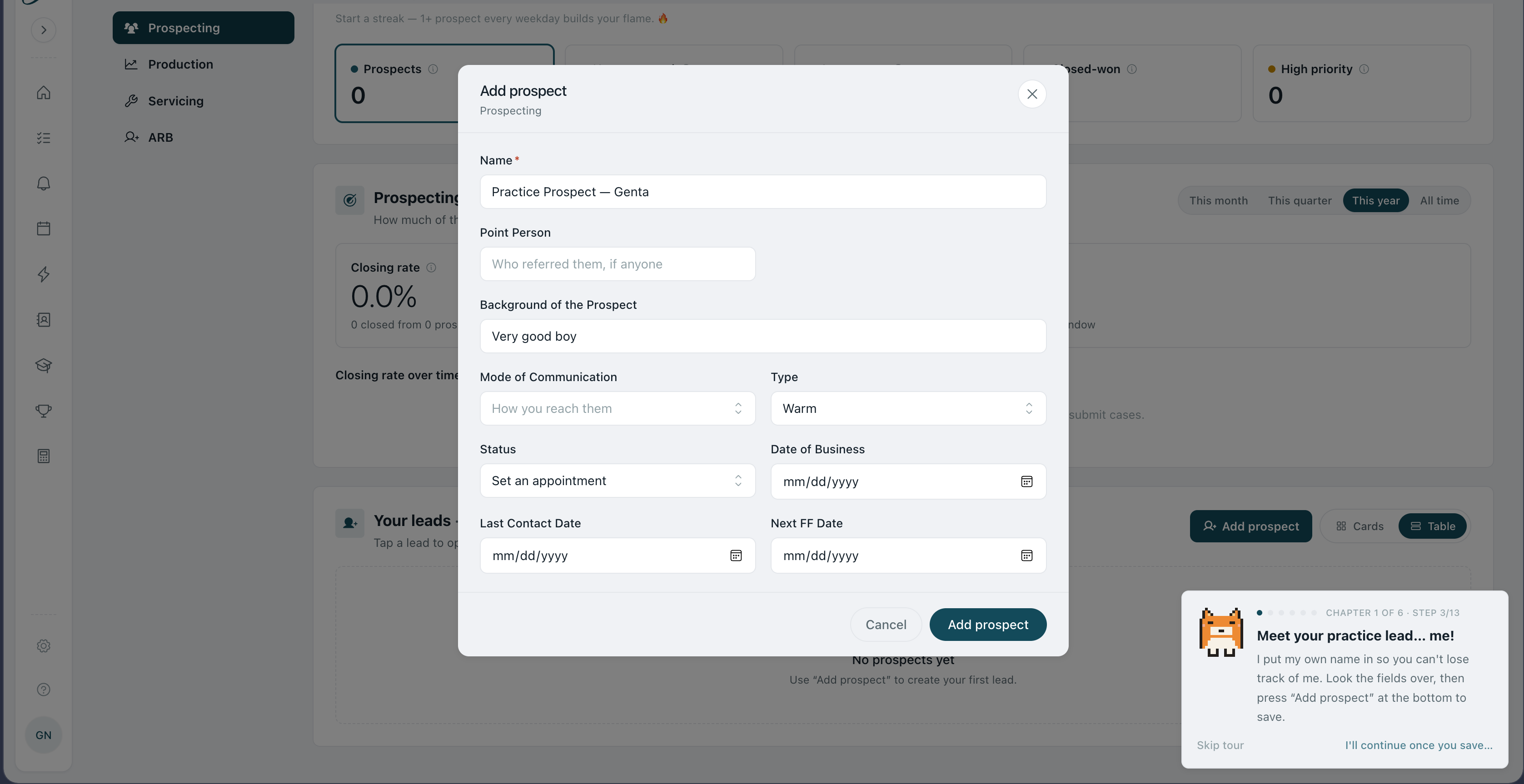 A practice lead
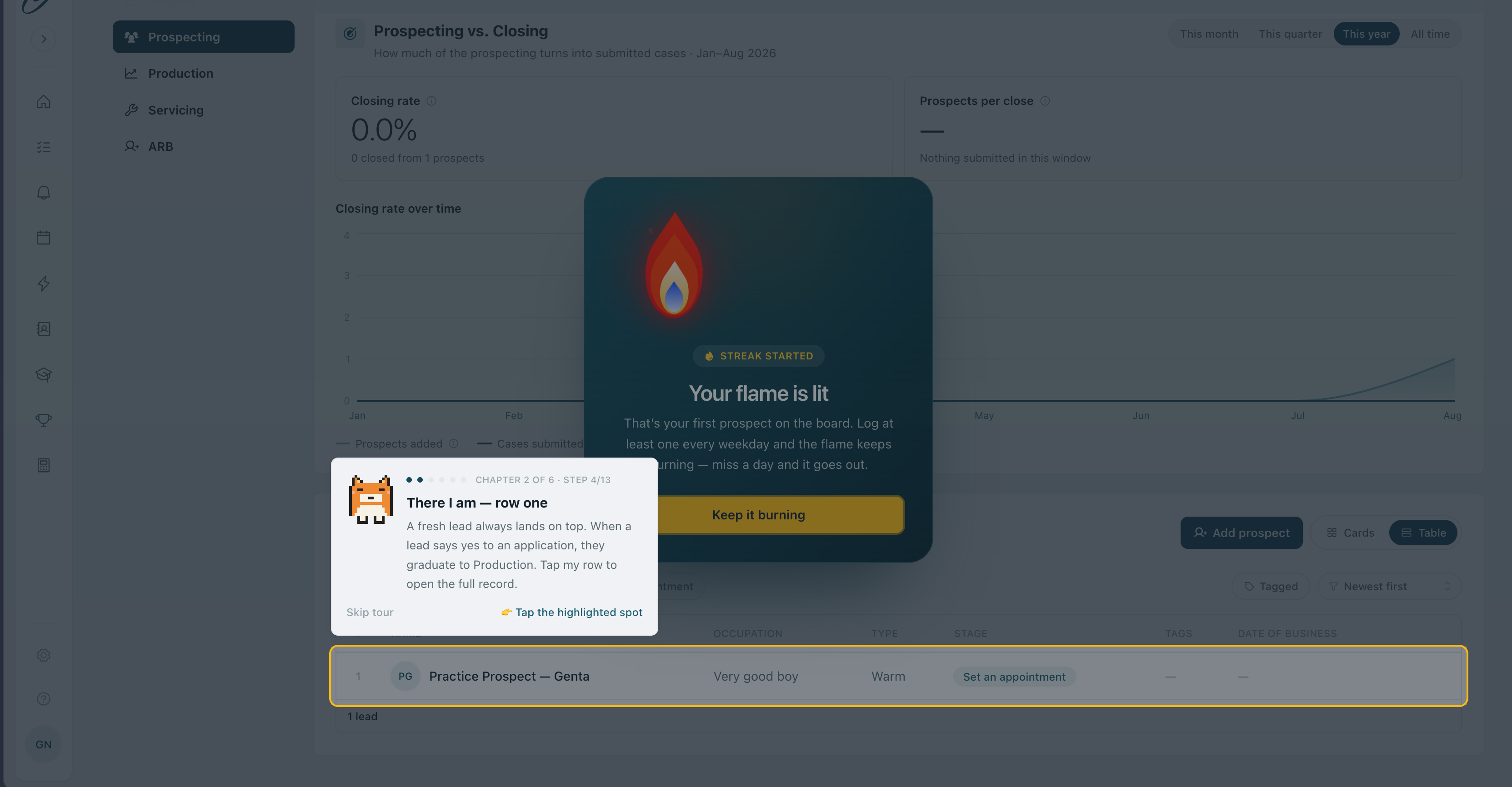 First streak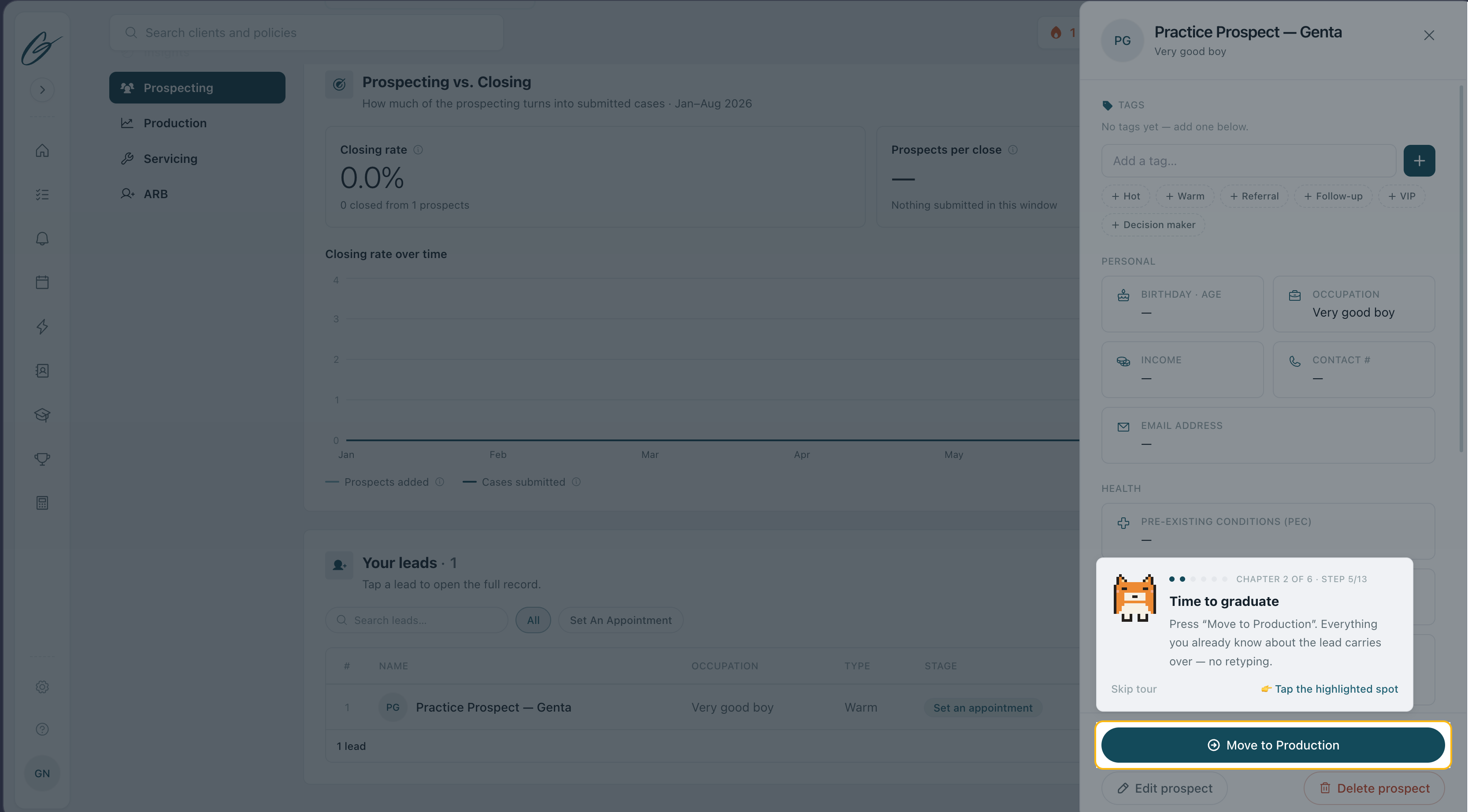
Streaks, badges, and leaderboards
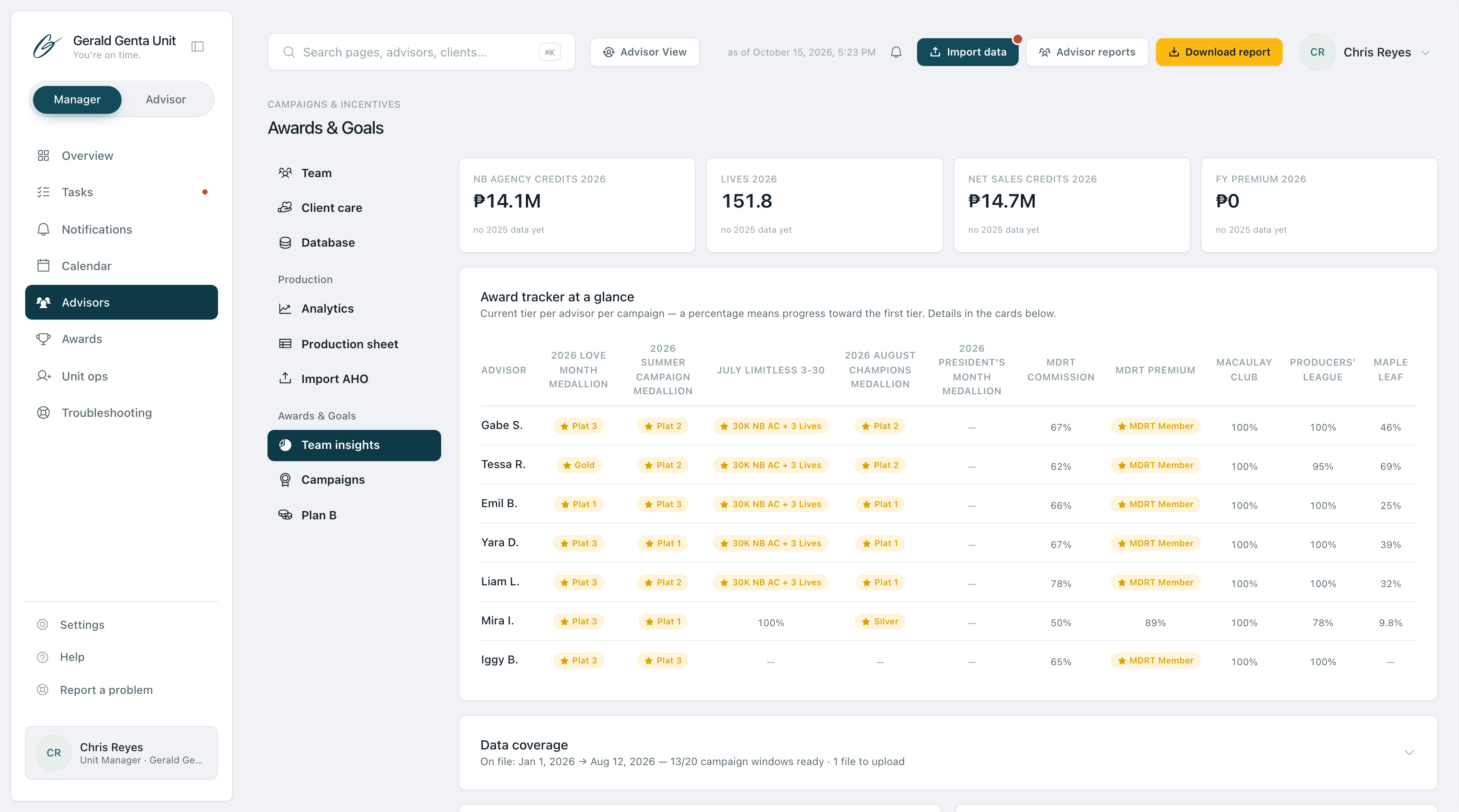
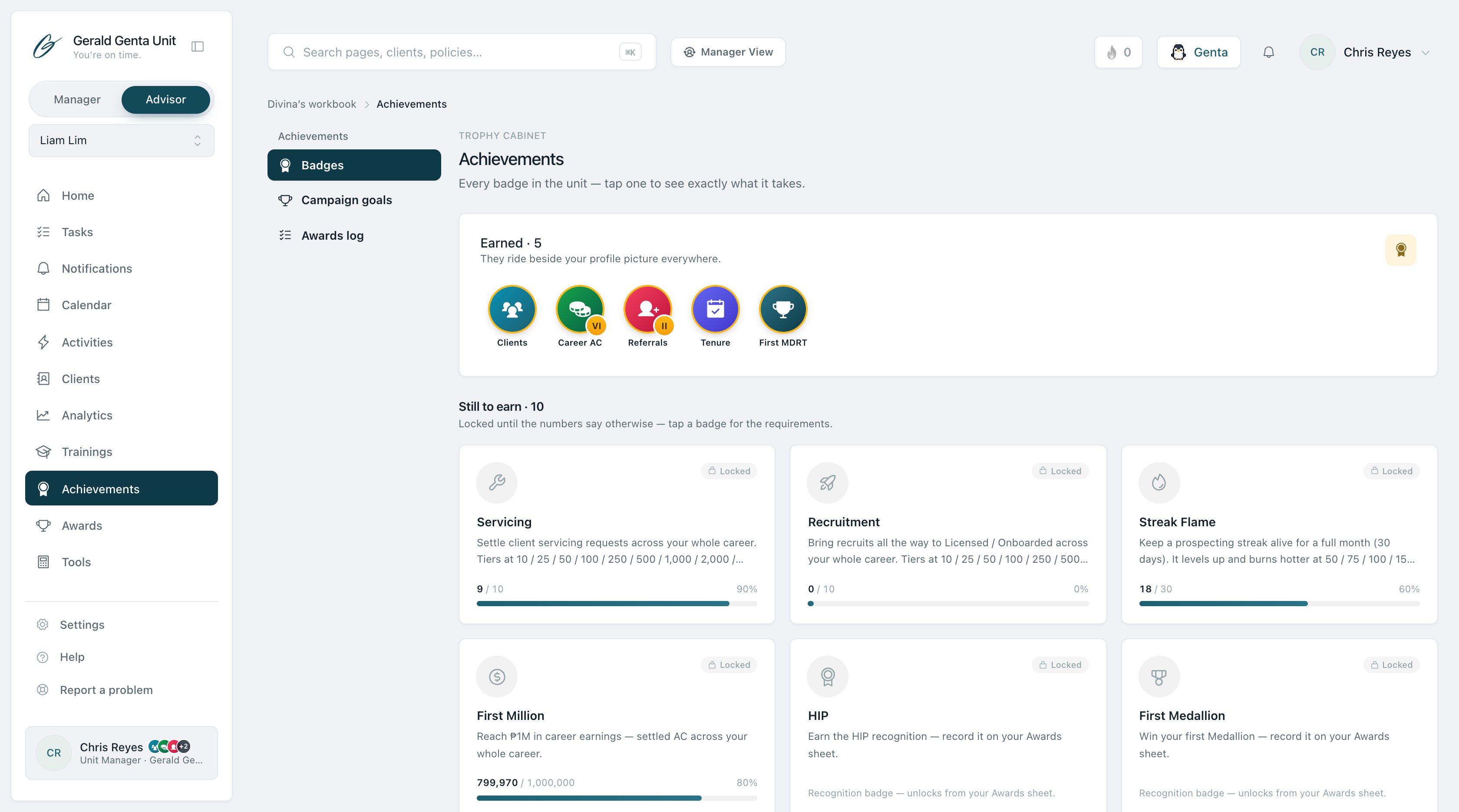
AdvisorDeck wraps a game layer around the habits the unit already wants: logging prospects, servicing clients, chasing campaign goals, and keeping production current. A prospecting streak with restores rewards consistency, Genta keeps the day's count and badge shelf one click away, and a trophy cabinet, campaign goals, and unit-wide qualification races make progress visible without another contest spreadsheet.
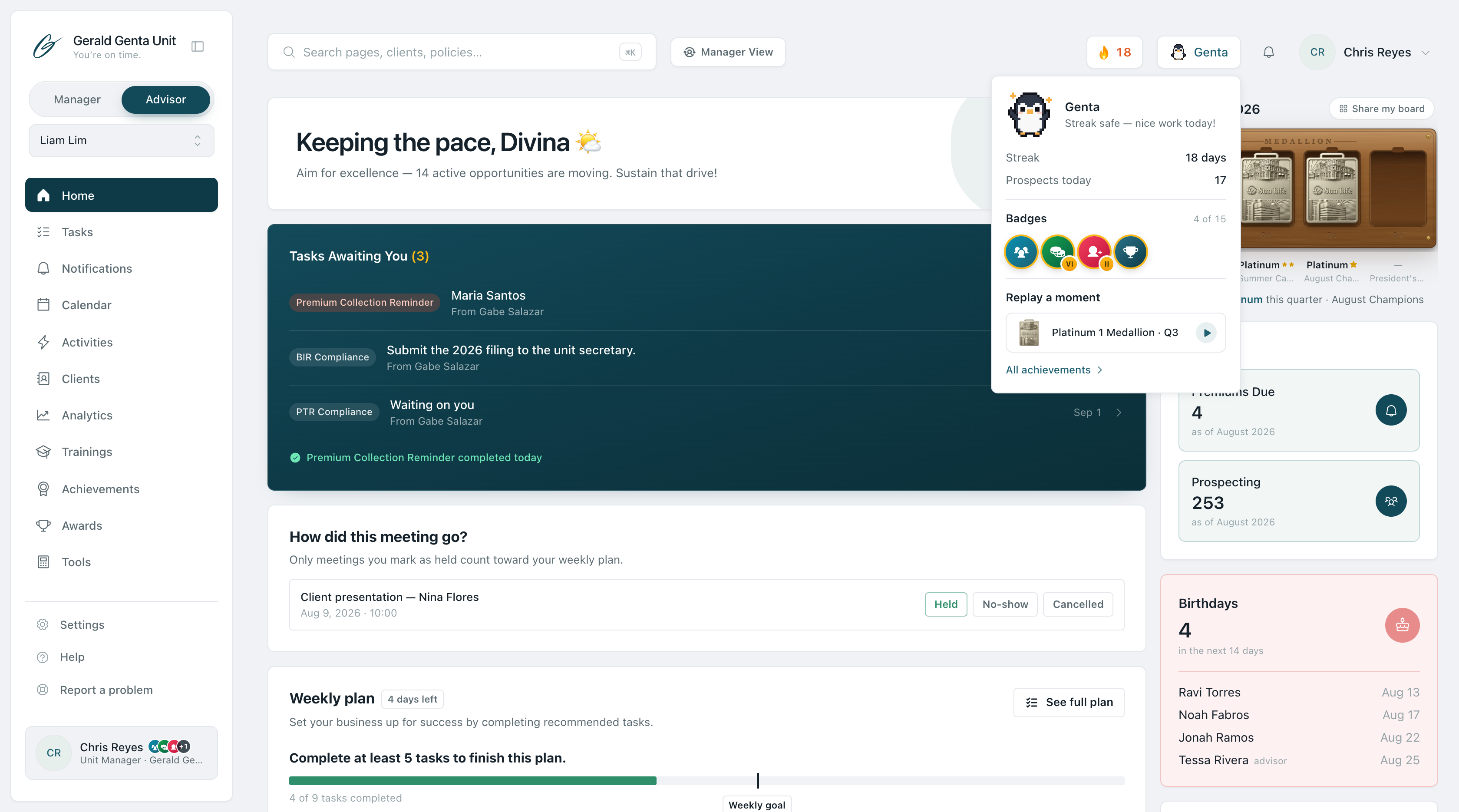 Trophy cabinet
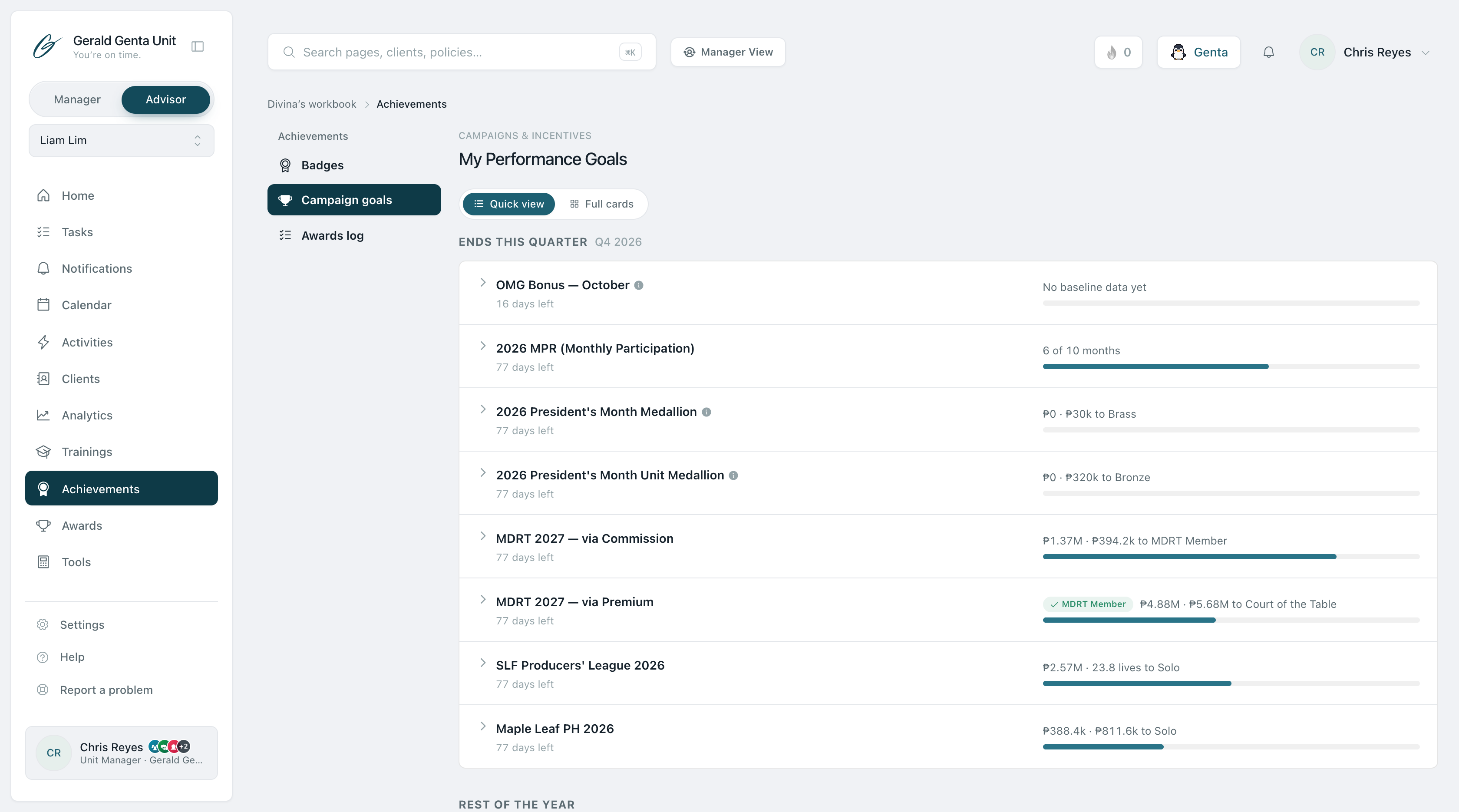 Campaign goals
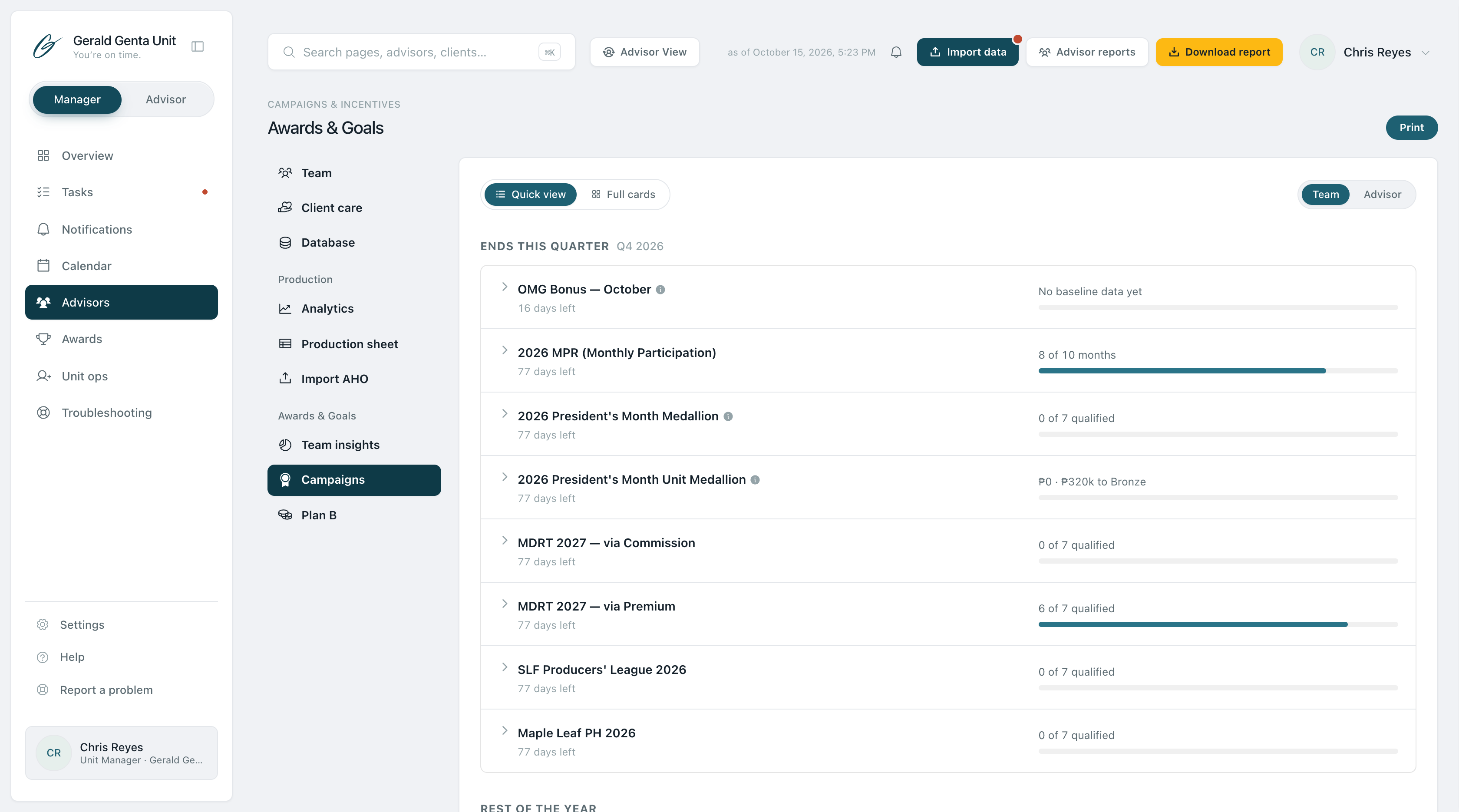 Unit campaigns
Calculators that feed the book
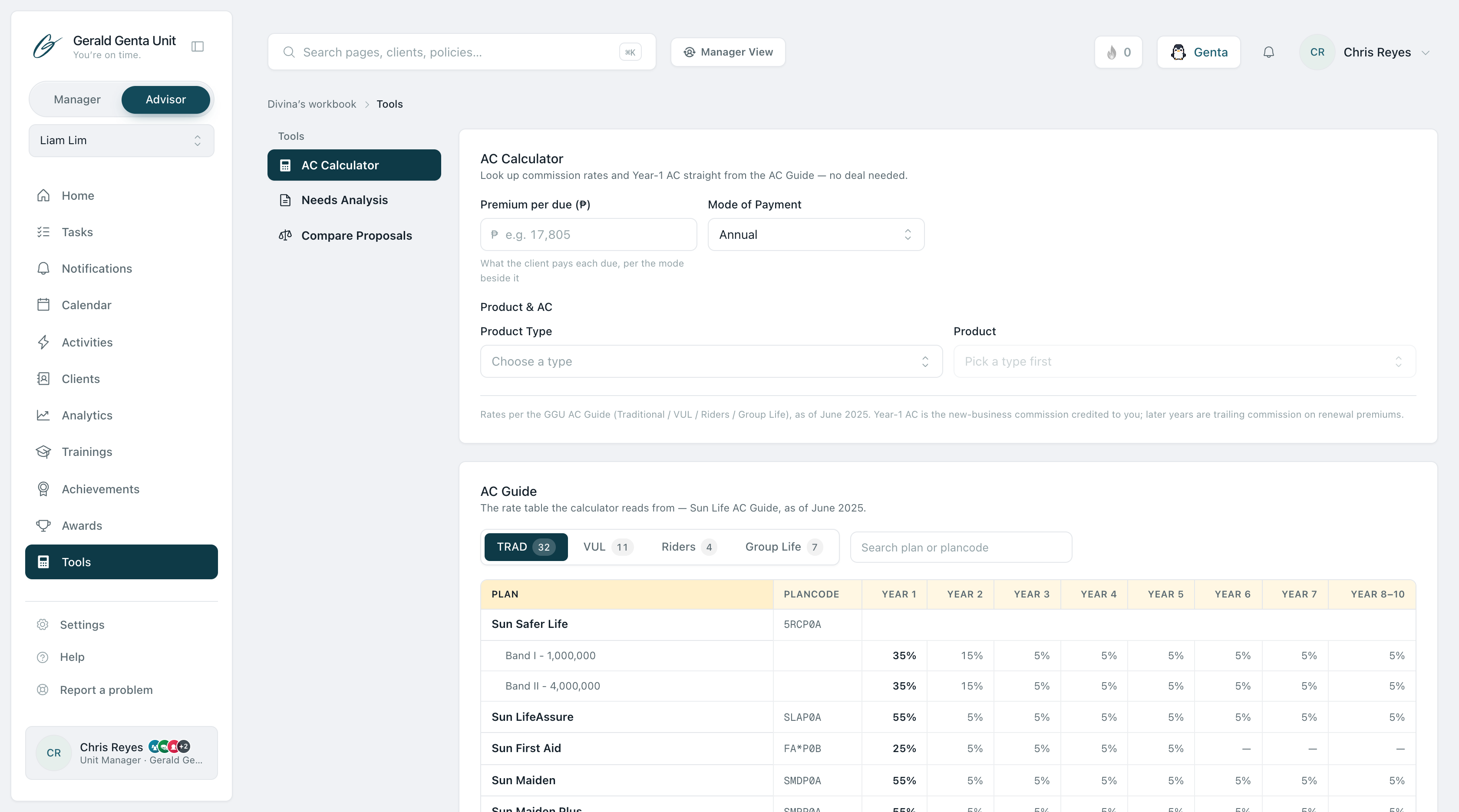
Needs Analysis and AC Calculator screens stay close to the advisor workflow. They support client conversations, estimate coverage and Year-1 AC from the unit's commission guide, and can save the result straight to a prospect instead of becoming another side note.
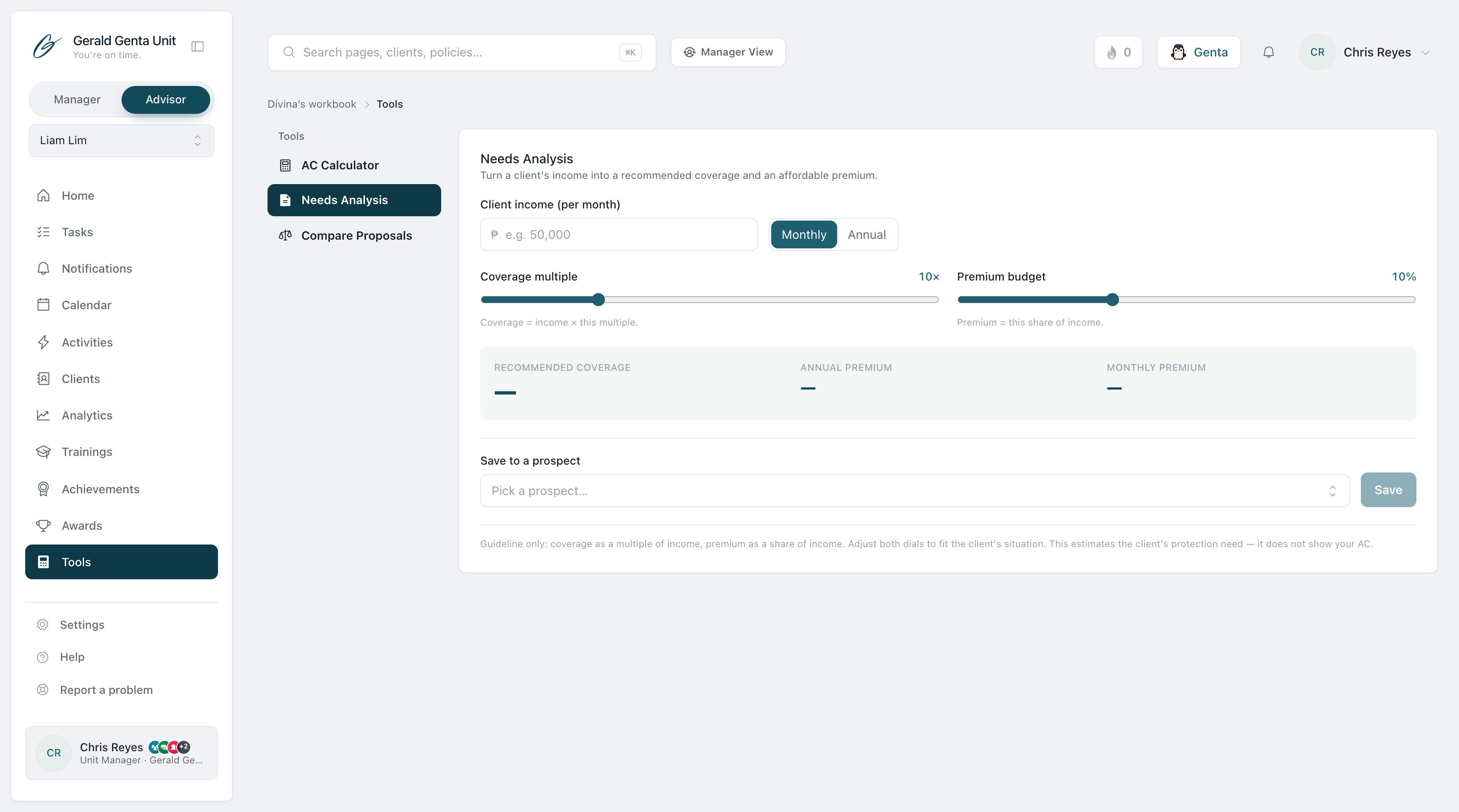
The import nobody else wanted to build
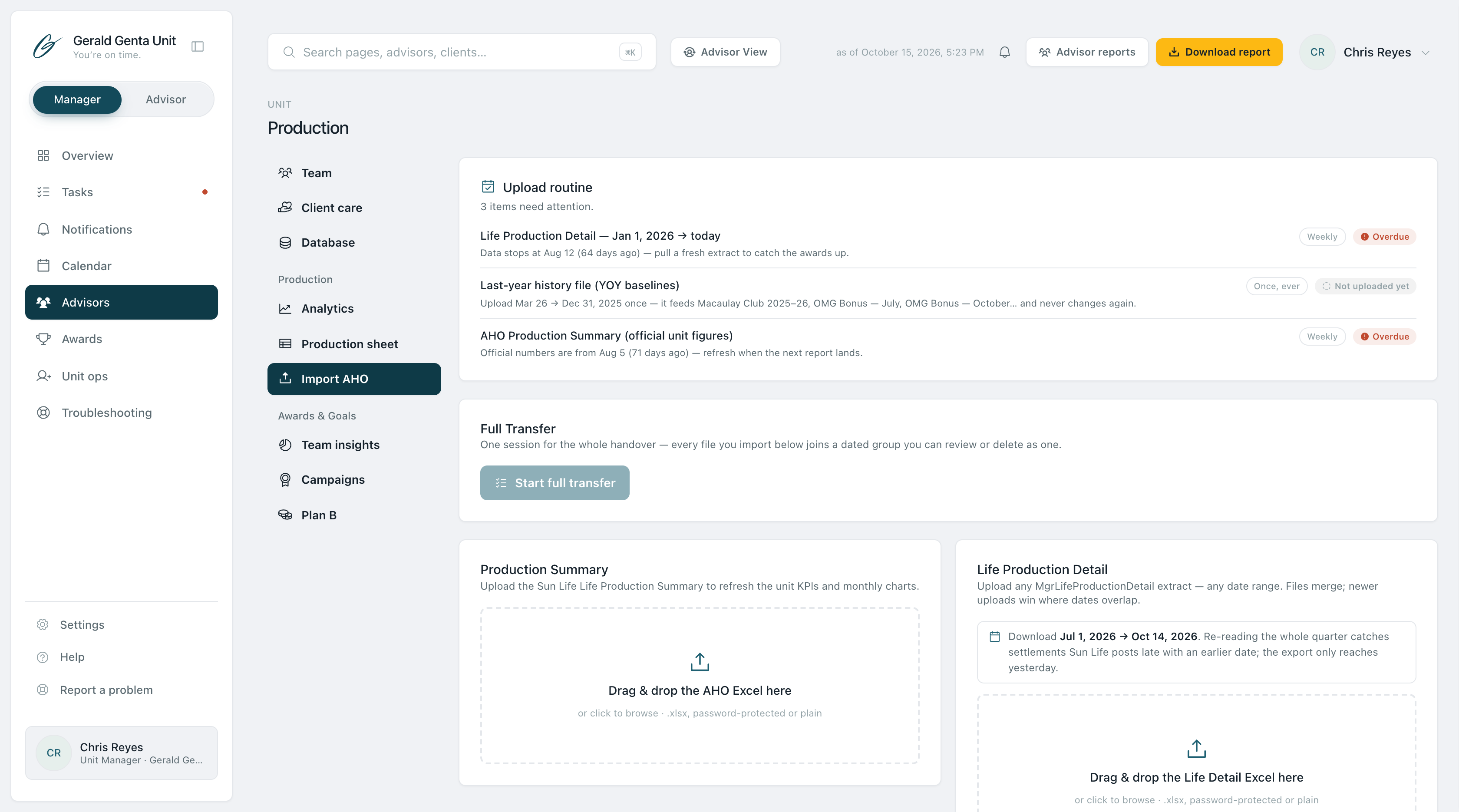
The unit's official numbers arrive as password-protected Excel exports from the carrier's legacy system. AdvisorDeck decrypts and parses them, validates rows against what the unit already knows, and re-imports idempotently — the same file can land twice without doubling anyone's production. Import history keeps restore points, and a data-coverage panel shows exactly which weeks the official record covers. The point is removing the handoff where numbers used to get retyped, renamed, or missed.
Print exactly what the manager needs
The print function grew from a one-click PDF into a report builder. The manager picks the period, the whole unit or selected advisors, and the sections that matter — and every figure in the preview names the AHO import it came from before it becomes a PDF for coaching, review, or leadership reporting.
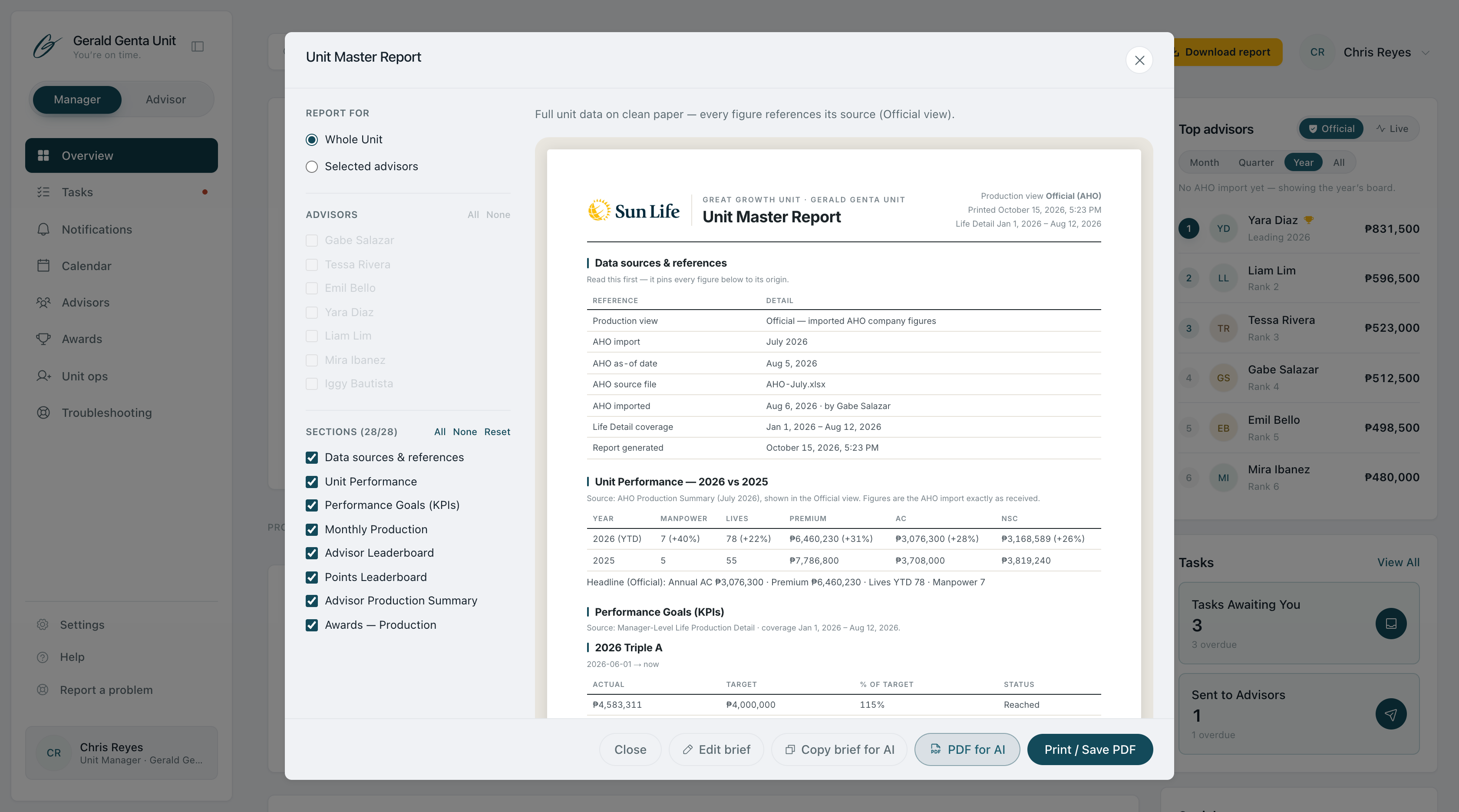 Unit master report
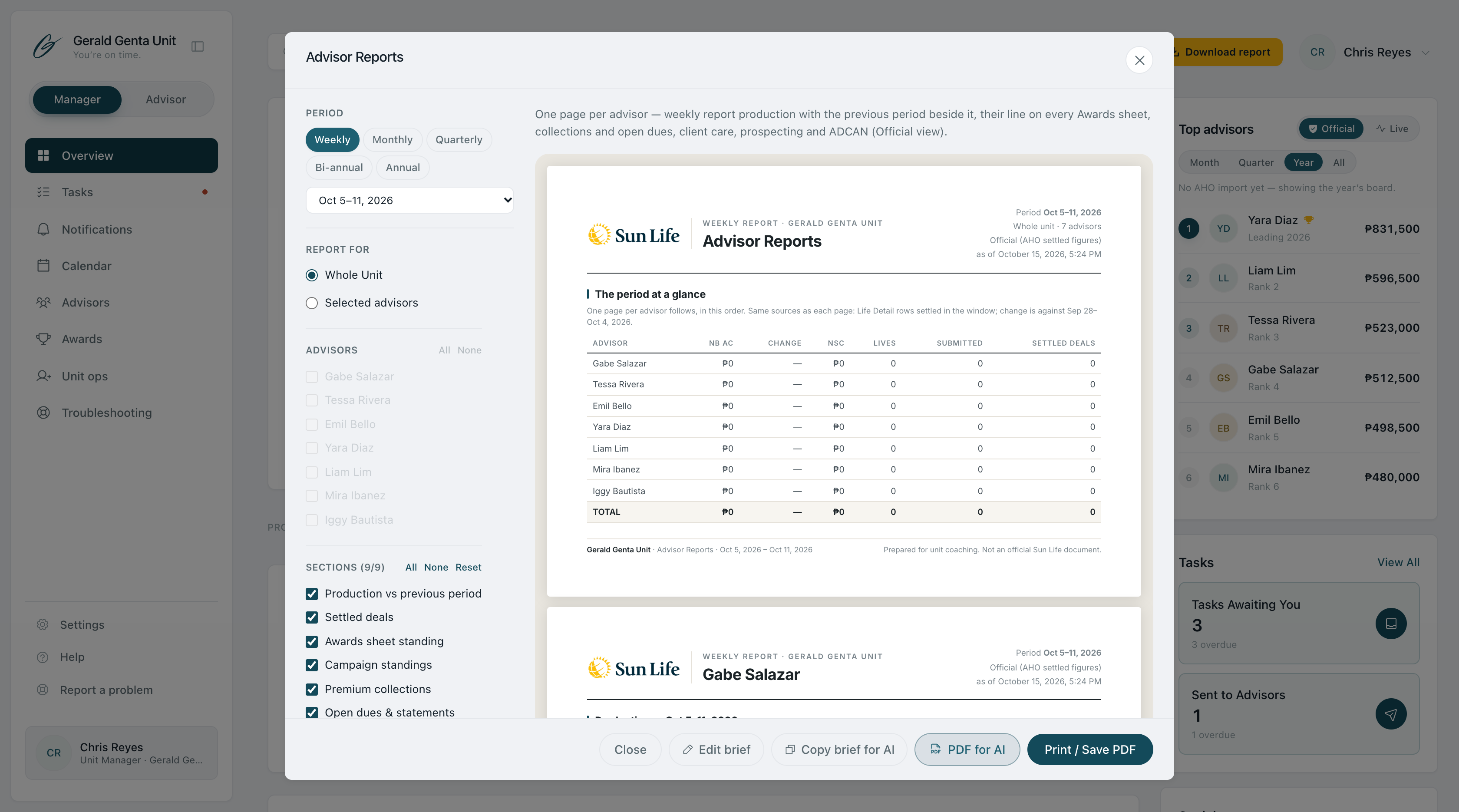 Advisor reports
Built like production software
Live users from week one meant no room for casual schema changes. The database evolved through 119 numbered SQL migrations, each tested against the Supabase CLI's Dockerized local stack — a disposable copy of production Postgres, Auth, and Storage — before touching the live database. The business logic the unit depends on — persistency, commission mix, collections KPIs — is covered by 206 test files — about 1,800 tests. TanStack Query keeps the interface honest about what is fresh and what is cached, and an in-app bug-report form gives the 17 real users a front door for feedback.
The operating rhythm
The loop is now automated: import the AHO file, update production, schedule the next client action, sync calendar tasks, keep advisor habits visible, and print what the manager needs. Sixteen advisors and a manager open the same picture every morning instead of rebuilding it every week.
Upload once, schedule automatically, report with selected proof.
AdvisorDeck connects official production, advisor activity, client lifecycle dates, gamified progress, and manager reporting into one weekly operating loop.
prospects, servicing requests, goal progress
unit KPIs, leaderboards, who needs coaching
one click, every figure referenced
What comes next
Nothing in the schema needs to belong only to Gerald Genta. The same roles, lifecycle, reminders, calendars, AHO imports, contests, and print workflows can become a template for any other agency unit still running on spreadsheets — the onboarding tour already teaches the app without me in the room.